
Judge denies Tohono O’odham Nation bid to block border construction
Ryan Knappenberger
WASHINGTON (CN) — A federal judge on Friday denied the Tohono O’odham Nation’s request to block the federal government from beginning construction on 62 miles of border wall across the Arizona-Mexico border that would cut through the tribe’s reservation.
Senior U.S. District Judge Richard Leon rejected the Nation’s argument that a preliminary injunction was needed to prevent changes to the reservation’s boundaries and contractors from trespassing on its land.
The George W. Bush appointee found a 60-foot strip of land designated a “public reservation” by President Theodore Roosevelt in 1907 allows the government to build the border wall without impacting the reservation’s boundary.
“The international border is an area of great significance to both the United States and to the Nation,” Leon wrote in the 18-page opinion. “While I have concluded that a preliminary injunction is unwarranted, I fully expect the government in the months ahead to follow through on its guarantees of consolation and cooperation with the Nation to address the Nation’s concerns regarding border wall construction!”
The Tohono O’odham Nation sued the Trump administration June 16, seeking a preliminary injunction to block Department of Homeland Security construction it learned of May 15 without being asked for consent.
On June 26, U.S. Customs and Border Protection awarded SLSCO Ltd. a contract for the “Tucson 5 Wall Project,” funded by last summer’s “One Big Beautiful Bill.”
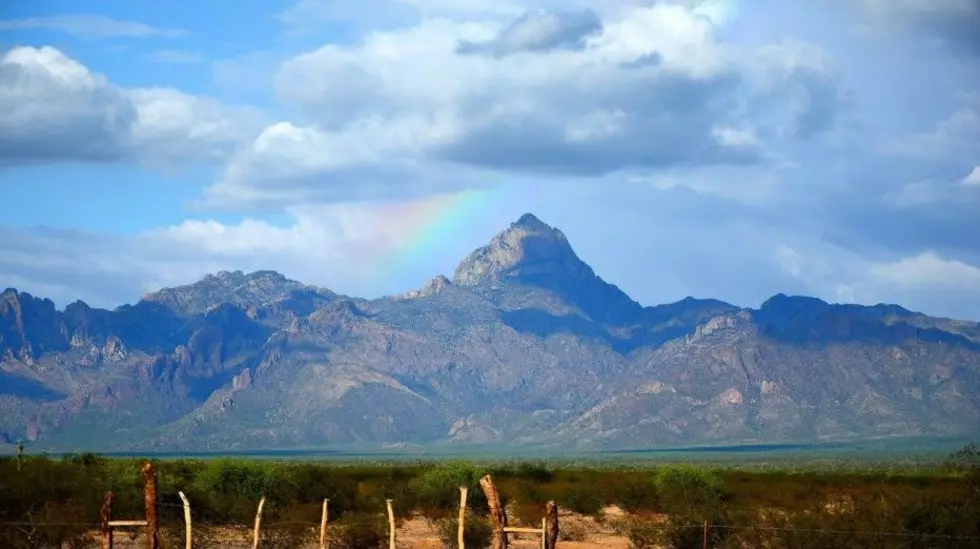
According to the Tohono O’odham, the project would “unilaterally alter” the reservation’s boundaries, destroy sacred areas including Baboquivari Mountain, home of the creator god I’itoi, separate O’odham communities and families, disrupt religious rituals and harm sacred plant and wildlife populations.
More than 60 threatened and endangered species regularly cross the border, including the highly endangered jaguar, Sonoran pronghorn and Mexican gray wolf.
The Tohono O’odham Nation is the largest Indigenous nation along an international border, historically spanning much of southern Arizona and Sonora, Mexico. Its unique size and location leave little directly applicable case law, as similar reservations are smaller or along the Canadian border.
The Nation argued it held aboriginal title to the land before the Roosevelt Reservation was created and that the federal reservation therefore never extended onto tribal land. Leon rejected the argument, citing a 1934 decision before the Solicitor of the Interior that rejected a similar claim.
Further, the Nation’s approval of erecting vehicle barriers along the Mexico border in 2004 acknowledged the existence of the Roosevelt Reservation, Leon said.
“Even if the Roosevelt Reservation does not exist on the Nation’s Reservation, plaintiff has not shown how construction of a wall on the existing international border will change the boundaries of the Nation’s reservation,” Leon added. “As a legal matter, it is well-established that Congress has exclusive authority to diminish reservation boundaries, and that Congress must make its intent to do so clear and unambiguous. But I am not aware of any case holding that construction of a border wall adjacent to a Reservation — with the possibility of activities that may interfere with the Nation’s use and occupancy rights — necessarily diminishes the Reservation’s boundaries.”
Friday’s decision comes after the Tohono O’odham Nation warned federal contractors Saturday that anyone not enrolled in the Nation would be trespassing on the reservation.
Under the Tohono O’odham Code, trespassers face fines of up to $5,000 per count and removal by tribal police.
Leon questioned whether the Nation could consider contractors trespassers as long as they remained on the Roosevelt Reservation.
“Indeed, significant uncertainties remain about the actual scope of construction activities and the extent to which they may interfere with the Nation’s land outside the Roosevelt Reservation,” Leon wrote, noting the contractors had been instructed to “confine the project footprint” to the 60-foot strip of land.
Department of Homeland Security General Counsel James Percival lauded the decision in a post on X, along with an image of Captain Picard as a member of the Borg stating “Resistance is Futile.”
“We respect tribal sovereignty but not to the detriment of border security,” Percival wrote. “This wall is getting built. Our authority is beyond dispute.”
The Nation did not respond to a request for comment.