
Judge strikes down livestock grazing plan in Montana grizzly habitat
Monique Merrill
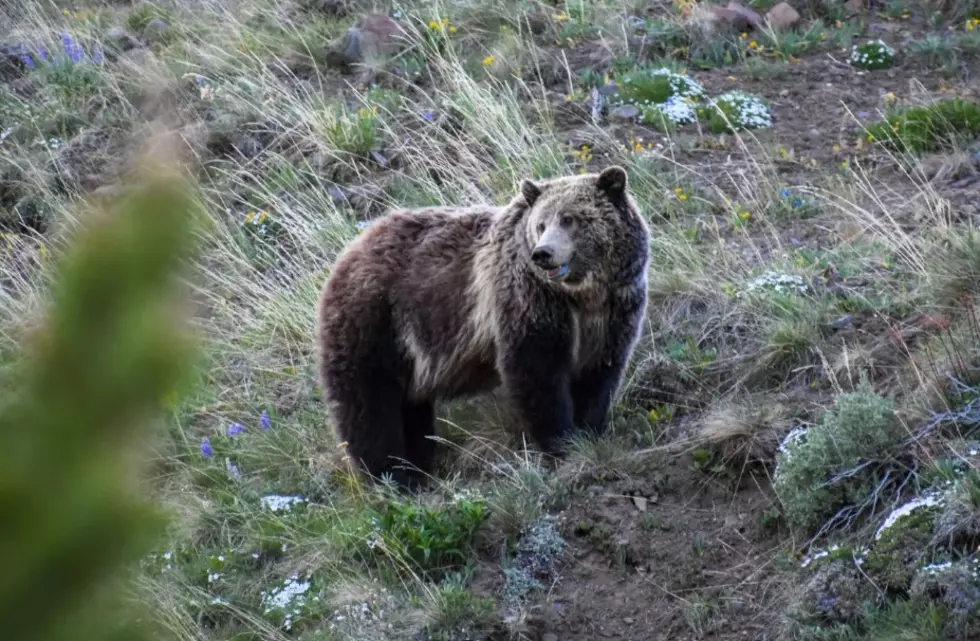
(CN) — Conservationists are celebrating after a federal judge on Wednesday ruled the U.S. Forest Service violated federal law when it authorized expanded livestock grazing in grizzly bear habitat outside of Yellowstone National Park in Montana.
“I’m thrilled the court struck down the federal government’s illegal decision to increase livestock grazing in important grizzly bear habitat,” said Andrea Zaccardi, carnivore conservation legal director at the Center for Biological Diversity. “Putting livestock on public lands where grizzlies live is akin to baiting these bears into conflicts.”
U.S. District Judge Donald Molloy, a Bill Clinton appointee, ordered the Forest Service to take another look at its East Paradise plan. That plan authorized expanded commercial livestock grazing leases on six allotments of land in the Custer-Gallatin National Forest’s Absaroka Mountains in south central Montana.
The nine conservation groups that sued the Forest Service, the U.S. Fish and Wildlife Service and the U.S. Department of the Interior accused the agency of failing to take a “hard look” at the plan’s potential impact on grizzly bears as required by the National Environmental Policy Act and by failing to prepare an environmental impact statement.
The court largely agreed with the conservation groups. For example, the conservation groups argued the environmental assessment failed to assess the plan’s potential effects on grizzly habitat connectivity, and the court noted the agency conceded it didn’t address connectivity in the assessment.
“This omission is arbitrary and capricious in light of the fact that ‘connectivity’ is considered one of the ‘six demographic factors that are important to the resiliency’ of grizzly bear,” Molloy wrote, citing a 2022 Species Status Assessment.
Molloy wrote that the Forest Service can’t ignore habitat connectivity and emphasized omitting the issue entirely is different from explaining why grazing wouldn’t harm it.
“Defendants once again conflate a reasoned explanation for omitting potentially relevant information (permissible under NEPA) with a complete absence of such information (impermissible under NEPA),” Molloy wrote.
Matthew Bishop, senior attorney at the Western Environmental Law Center representing the plaintiffs, said the best available science shows that grizzly bears need connectivity and movement support to become fully recovered as a species in the lower 48 states.
“We agree the agency needs to take a harder, closer look at these issues before authorizing activities in important linkage areas like the Absaroka Range,” Bishop said in a statement.
But, in a small win for the Forest Service, Molloy found that it properly described the baseline condition for grizzly bears. However, the judge otherwise agreed with the conservation groups that the plan downplayed the effect of earlier stocking dates, failed to assess potential effects to habitat connectivity, didn’t sufficiently consider cumulative effects and failed to prepare an environmental impact statement.
“There should never be a wildlife resource policy whereby domestic livestock have priority over wildlife on public lands, yet that is essentially what was done in this case,” Clint Nagel, president of the Gallatin Wildlife Association, said in a statement. “The underlying premise that wildlife is expendable, that they will always be present in our world, has simply been proven wrong. We should know by now, that is not and will not be the case.”
The conservation groups also argued that both the Forest Service and Fish and Wildlife Service violated the Endangered Species Act by concluding the plan would pose “no jeopardy” to grizzly bears; however, the court dismissed that claim as waived since it wasn’t raised in the motion for summary judgment.
“The science is clear: grizzly bears need safe, livestock-free passage between population cores in order to fully recover,” Lizzy Pennock, carnivore coexistence attorney at WildEarth Guardians, said in a statement. “We are grateful the judge redirected the U.S. Forest Service toward the best available science and its legal responsibility to protect wildlife.”
U.S. Magistrate Judge Kathleen DeSoto heard arguments on the matter in October and issued her recommendations to Molloy in March, which were adopted in full.
The agencies raised a number of objections to DeSoto’s findings, but Molloy rejected each one, concluding that the errors are significant enough to demand vacatur of the environmental assessment and decision notice.
“While the Forest Service may be able to offer better reasoning on remand and adopt the same decision it has, the errors identified above specifically and directly impact grizzly bear recovery,” Molloy wrote.
The federal defendants declined to comment.