
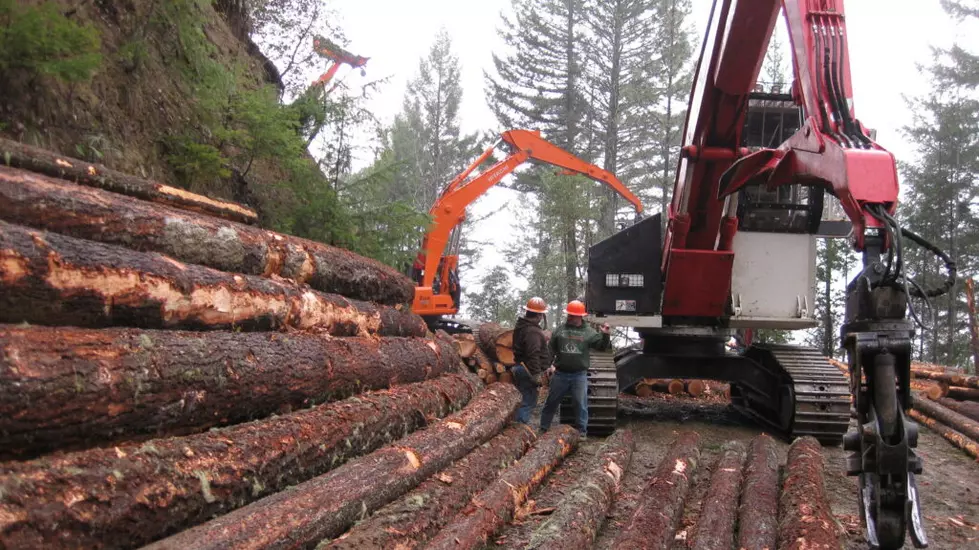
Conservationists lose bid to block Montana timber thinning project
Monique Merrill
(CN) — A Montana timber thinning project got the green light to proceed on Tuesday as a federal judge shut down environmentalists’ efforts to block it.
“Because plaintiffs have failed to show that the activities authorized by the Big River thinning project are likely to cause irreparable harm, the court declines to issue an injunction at this time,” U.S. District Judge Dana Christensen, a Barack Obama appointee, wrote in a 13-page order.
The Bureau of Land Management authorized the Clark Fork Face Forest Health and Fuels Reduction Project in April 2024. The larger initiative includes several projects, and the Center for Biological Diversity and other conservation groups took aim at the Big River thinning project, which is set to commence on Tuesday.
The Big River timber thinning project authorizes the thinning of small pole-sized trees that are taller than 4.5 feet in height and less than eight inches in diameter.
The groups argued that the thinning project would displace grizzly bears through the construction of roads. However, the agency pointed to a declaration from a field office forester who clarified that the thinning project won’t require any road construction. The declaration was enough to satisfy Christensen.
“In the absence of any planned roadwork or road construction, the court finds it unlikely that any harm to grizzly bears — be it the species as a whole or its individual members — will result from the Big River thinning project,” Christensen wrote.
The conservation groups also raised concerns about lynx populations, arguing that the project should be blocked because it will occur in the species' critical habitat. But, the groups didn’t provide enough evidence to persuade the court, particularly in light of the project contract that specified only trees too small to provide habitat for snowshoe hare or lynx will be cut.
“Without more from plaintiffs, the court cannot conclude that the challenged project is likely to adversely affect the Canada lynx or their critical habitat,” Christensen wrote.
Christensen also dismissed the argument that the thinning work itself will irreparably harm the conservation groups.
"The Big River thinning project pertains only to pre-commercial thinning of seedlings, saplings, and small pole sized trees greater than 4.5 feet in height and less than 8 inches in diameter; it does not contemplate the removal of mature trees," Christensen wrote. “Therefore, albeit a close call, the court finds it unlikely the thinning activity will irreparably harm plaintiffs’ interest in maintaining the area as it looks today.”
While the timber thinning project may proceed, the merits of the conservation groups’ complaint against the Clark Fork Face Project at large will be addressed before Christensen in September.
Over its estimated lifespan of 10 to 15 years, the Clark Fork Face Project intends to reduce forest fuel loading, enhance limber pine populations, increase acreage of forest communities and provide opportunities for timber harvest where available.
An estimated four million board feet of timber will be removed yearly as part of the project, which is expected to generate $70.6 million in local income and create 970 jobs. As of fall 2024, the first timber sale was approved and 3.25 million board feet of timber were harvested.
The Center for Biological Diversity — joined by nonprofits Alliance for the Wild Rockies, Council on Wildlife and Fish, Native Ecosystems Council and Yellowstone to Uintas Connection — sued the agency in December, arguing that the approval of the project violates environmental law and threatens already endangered species and fails to consider other threats posed by the project.
The groups argue that the project will block migration corridors for native wildlife in the Garnet Mountain Range, a scenic and heavily forested range excluded from the National Forest System and primarily owned by the Land Bureau.