
Wildfire threats to Colorado watersheds far exceeds funding
Chase Woodruff
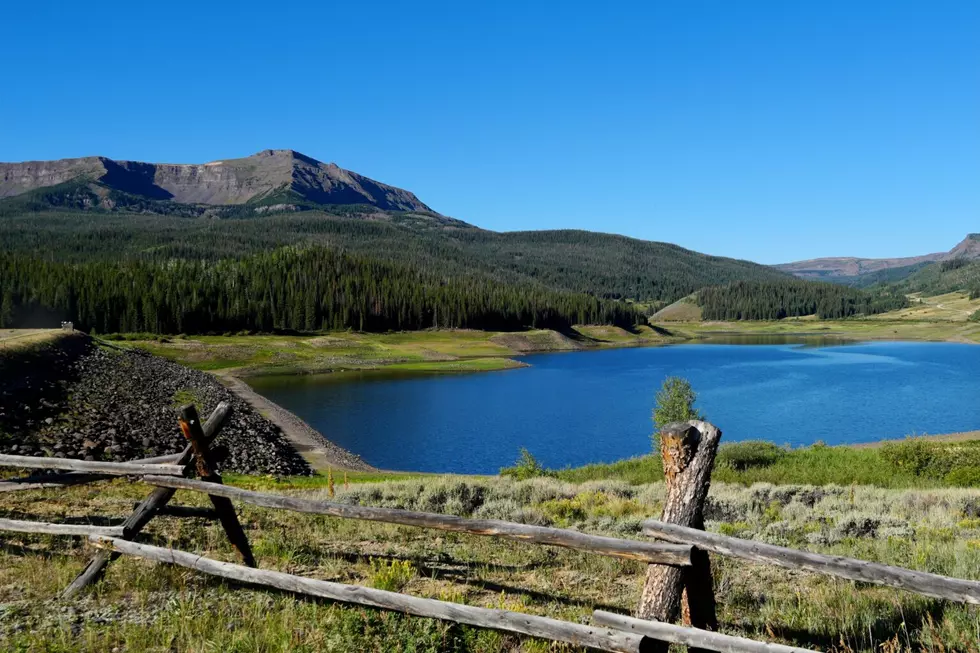
(Colorado Newsline) High on a ridgeline near the headwaters of the Yampa River, a ditch dug more than a century ago snakes for miles through the rugged terrain of the Routt National Forest, shepherding water from the Yamcolo Reservoir across a 9,000-foot-high mesa to an area south of the town of Yampa, in southern Routt County.
About a dozen cattle ranches rely on water from the Stillwater Ditch to irrigate their hay meadows longer into the growing season — at least in a good year. It’s been dry this summer as water users in the Upper Yampa Water Conservation District, which manages the ditch and the reservoir above it, faced severe cuts to their allotments amid unprecedented drought conditions that are gripping much of the state.
But even as farmers and ranchers dealt with the immediate impacts of a historically dry summer, a segment of the Stillwater Ditch last month became the site of another, longer-term battle that Colorado water managers are increasingly having to wage against a warmer, drier climate: protecting watersheds from severe wildfire impacts.
For a month, a “hand crew” of 20 to 30 workers hiked up and down the slope above the ditch with chainsaws and other heavy equipment, putting in grueling 12-hour shifts trimming and thinning trees in the overgrown forest.
“We used to play a game when I first started working here, and we’d come up and work on the ditch on our lunch breaks: How far can you walk through the forest without touching the ground?” said Andy Rossi, the Upper Yampa water district’s general manager, during a tour of the project site this week for media and students. “Because there was so much deadfall and it was so thick.”
A federal environmental review shaped the water district’s plans for the project, which was funded by a state grant program but took place on national forest land. Buffer zones around eagle’s nests and other areas flagged as important for wildlife were off-limits, and the work couldn’t begin until July 1, after elk-calving season.
As with most “hand thinning” projects, trees in the treated area were delimbed or cut down according to certain predetermined criteria, with an eye toward reducing fuel for wildfires and increasing biodiversity — in this case, favoring aspen and Engelman spruce, compared to the overabundant, and less fire-resilient subalpine fir. The cut limbs and trunks are heaped into “slash piles” and left to dry out for at least a year before they’re safely burned in the winter.
The main objective for the Upper Yampa district — and for a growing number of Colorado water managers undertaking the painstaking work of wildfire mitigation — isn’t to prevent fires altogether, but to reduce burn severity and the risk of post-fire impacts like floods, debris flows and water contamination. If post-fire debris flows were to damage the Stillwater Ditch, Rossi said, it could take years to fix.
“If thousands of acres of ranch land are out of business for one, two, three seasons, they’re done,” he added. “So taking water infrastructure … and elevating it to a very high level in the risk assessments, when you’re looking at landscapes for wildfire mitigation, all of a sudden becomes critically important, and this is happening all over the state of Colorado.”
Sheer scope of the problem
More than 13 million acres of mountain watersheds across western and central Colorado are now covered by a Wildfire Ready Action Plan, or WRAP, developed as part of a watershed protection program administered by the Colorado Water Conservation Board, the state’s lead water agency. The program was launched with an initial $30 million in funding appropriated by the state Legislature in 2021, in the aftermath of the previous year’s record-shattering outbreak of wildfires.
Five years on, the program has conducted a sweeping analysis of statewide post-fire risks and guided more than a dozen water managers through the WRAP planning process. But as climate change continues to intensify wildfire hazards in Colorado — the town of Beulah, in the burn scar of this summer’s Aspen Acres Fire, was the latest to be hit by deadly post-fire floods this week — all this new data also serves to illustrate the sheer scope of the problem.
The forestry work above Stillwater Ditch — a heavy lift, involving years of local planning, a state grant and close coordination with the federal government — treated about 300 acres deemed the highest priority within the 33,308-acre Bear River watershed, itself only a small part of an Upper Yampa basin measured in hundreds of square miles.
About 10% of Colorado’s roughly 24 million acres of forest “need urgent attention to address forest health, wildfire risk and threats to water supplies,” the Colorado State Forest Service wrote in its most recent action plan. The Stillwater Ditch project’s hand crews were a relative bargain at $1,700 per acre; depending on factors like equipment and terrain, treatment costs routinely range from $3,000 to $5,000 per acre or more — making even the state’s highest-priority to-do list a multibillion-dollar proposition.
Two-thirds of those forested acres are owned by the federal government. Getting permits for projects on public land can be a headache, especially when staffing at agencies like the U.S. Forest Service has been “completely diminished,” Rossi said, by Trump administration cuts. But across landscapes spanning millions of acres, permitting bottlenecks pale in comparison to factors like cost, workforce capacity and other logistical limitations.
“The problem is so big, there is not enough time and energy to do it,” Rossi said. “The scale of it is so vast that you have to step back and say, ‘OK, what are we trying to do here?’”
Far more work than funding
Denver Water, the state’s largest water utility, has learned the hard way how costly and disruptive wildfires can be for a water system. The 1996 Buffalo Creek Fire and 2002 Hayman Fire both impacted the utility’s infrastructure in the South Platte River basin southwest of metro Denver.
“We are still, 20 years on, working on removing debris in our Strontia Springs Reservoir,” Alan Salazar, Denver Water’s CEO, told an audience at the annual summer conference of the Colorado Water Congress in Steamboat Springs on Tuesday. “It’s a multimillion — not single-digit million, but tens of millions of dollars’ worth of engineering and removal.”
Denver Water’s board of commissioners voted earlier this month to endorse Proposed Initiative 308, a 2026 ballot measure that aims to raise up to $175 million in new revenue by exempting sporting goods sales tax collections from the caps set by the Taxpayer’s Bill of Rights. About half the new funding would be directed toward the CWCB’s watershed protection grants and other wildfire mitigation programs.
“There is far more work than there is funding, so this initiative, should it come before voters and be approved, would be a key source of dollars to reduce wildfire risk,” Madelene McDonald, Denver Water’s manager of watershed planning, said in a statement. “Every project we can complete helps ensure a clean water supply and reduces property damage — saving enormous amounts of money and resources down the line.”
“Money is a big limiting factor,” Aaron Citron, Colorado policy director at the Nature Conservancy and one of Initiative 308’s sponsors, said in an interview. “We know we can’t treat every acre. I think if we can get to something like 10% of the acres treated, we can make a real meaningful difference, and there’s a lot of good science identifying where those priority landscapes are.”
Even as the idea of more effective forest management catches on with the public, support for substantial new sources of dedicated funding for such efforts isn’t always assured. A proposal floated this summer in Routt County to raise local sales taxes for wildfire mitigation projects isn’t expected to move forward after a poll showed a lack of support. In a time of severe budget crunch at the state Capitol, measures backed by Western Slope lawmakers to invest in forestry projects are among the many bills that have failed to advance in recent legislative sessions.
Initiative 308, as a statutory measure, can’t “bind” future legislatures into mandatory spending, Citron said at the Water Congress, but sponsors hope its passage would send a clear message to lawmakers that wildfire mitigation should rank high on the state’s priority list. The initiative is pending certification for the ballot after submission of the required number of signatures.
“We see it as putting ourselves in line,” he said. “In some years, when there’s not enough, we will leave the final decision to our elected officials. In years like this, they might have to cut this back.”
Widespread misconceptions
As the West’s wildfire crisis has intensified in recent years, misconceptions about the scope of and strategy behind mitigation efforts have proliferated.
That’s due in large part to leading Republicans like President Donald Trump, a denier of human-caused climate change who has repeatedly invoked forest management — “raking and cleaning and doing things,” as he put it while touring the aftermath of California’s deadly Paradise Fire in 2018 — as a catch-all solution to catastrophic fire risk.
“(Electric vehicles) aren’t the answer. Sending your money to D.C. for wind and solar isn’t the answer,” U.S. Rep. Lauren Boebert told the Colorado Water Congress on Wednesday. “It’s being good stewards of our land, managing our forests, so we aren’t battling these catastrophic wildfires year after year.”
“Policy, not climate, fueled fires” in the record-breaking 2020 wildfire season, argued one Colorado conservative commentator at the time. “They could just allow logging in the areas and the problem fixes itself,” wrote one social media user impacted by the Aspen Acres Fire last month.
By the same token, there’s lingering hesitation among many environmentalists who fear that forest management could prove synonymous with clear-cutting timber projects across Colorado’s treasured national forests.
But large-scale logging as a forest management tool is a nonstarter in Colorado, which has virtually no timber industry to speak of — a reality that has far less to do with regulatory barriers than with the challenging economics of harvesting relatively low-value wood products from Colorado’s rugged alpine terrain.
“What we’re talking about is thinning, pile burning, prescribed fire, fuels mitigation — around communities, around reservoirs,” Citron said. “It’s projects that are identified by HOAs, local governments, fire districts. There has not been a particularly robust timber industry in Colorado for a number of years.”
“If this were lodgepole pine, it might be worth a logging operation, because it’s a viable timber resource,” said Sally Ross of Quandary Consulting, the contractor in charge of the Stillwater Ditch mitigation project. “But nobody’s really interested in a bunch of little subalpine fir.”
Even with a major funding boost for mitigation projects, large, destructive wildfires are likely here to stay. Protection of homes and other structures is often the highest-priority objective, while larger-scale fuel reduction treatments and prescribed burns aim primarily to decrease burn severity in the event of a fire, and to mimic the lower-intensity “fire regimes” that characterized the landscape in previous centuries.
“The science tells us there should be some fire in the landscape. … You have to learn to live with that fire,” Rossi said. “You’re not going to control it all, so it almost becomes more like, ‘What does the post-fire look like? It’s happening. What do we want it to look like after it burns?'”
The supercharging of wildfire activity by a warmer and drier climate, meanwhile, is unmistakable. One widely-cited 2016 study found that human-caused climate change alone doubled the area burned by fires in the western U.S. between 1984 and 2015. More recent research on the causes of California’s fivefold increase in forest acreage burned since 1971 concluded “that nearly all of the observed increase in (burned area) over the past half-century is attributable to anthropogenic climate change.”
“The severity of catastrophic wildfire in Colorado has intensified — I think, unfortunately, we have to expect that that will continue,” Salazar said. “It’s now a bigger and more emerging state economic risk, human risk, and all that goes with it.”