
Canadian company to probe copper, gold resources near Potomac
Laura Lundquist
(Missoula Current) Another international mining company is asking to sample Montana’s mineral resources, this time near Potomac.
The Montana Department of Environmental Quality this week released an environmental assessment of the Copper Cliff mining exploration project, proposed in the Garnet Range, 8 miles southeast of Potomac. DEQ is accepting public comment on the environmental assessment until Nov. 5.
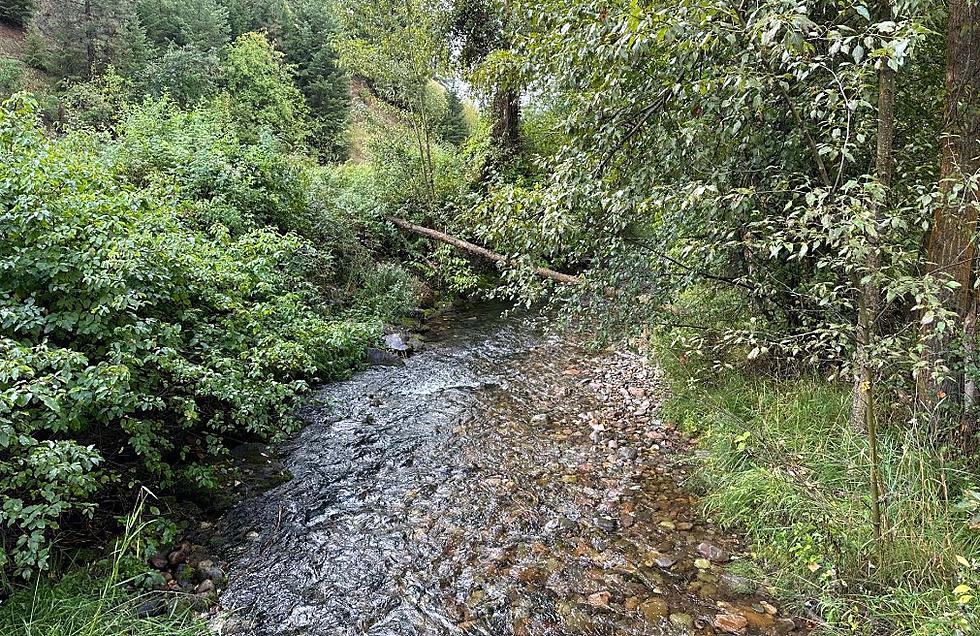
The exploration drilling would occur on private land owned by Kennecott Exploration Company. Kennecott’s 124 acres are surrounded by public land managed by the Bureau of Land Management and sits at the headwaters of Union Creek, which flows through Potomac before it joins the Blackfoot River near Johnsrud Park, 13.5 miles downstream.
The mining company, Mogotes Copper USA Inc., submitted a plan of operations in August that proposes the construction of four drill pads with four drill holes per pad. The deepest holes would descend 6,500 feet or 1.25 miles. Work would be conducted around the clock for up to seven days a week, so artificial light would be used after dark.
As with all exploration projects, the company will need water to cool its drilling equipment and plans to use up to 2,500 gallons a day. According to DEQ’s environmental assessment, the company will use Kennecott’s groundwater rights and take water from natural springs that Kennecott developed when it was conducting mineral exploration on the property. DEQ determined that groundwater would likely be encountered during drilling operations, “although the depths and rates of groundwater inflow are uncertain.”
Motoges Copper anticipates starting as early as November. Less than 2 acres would be disturbed during exploration, which would be completed no later than July 31, 2028. However, the drilling is not likely to stop after the exploration project is finished, based upon Mogotes’ predictions.
The Copper Cliff mine was developed in the early 1900s. By 1919, the Potomac Copper Company had developed four main tunnels. Subsequent exploration drilling was conducted by other companies including the Anaconda Copper Company and the current landowner, Kennecott Exploration Company, a subsidiary of Rio Tinto.
During a 10-year exploration project that started in 2006, Kennecott/Rio Tinto claimed to have discovered gold-copper porphyry deposits in the Copper Cliff district. However, no exploration activity has occurred since 2017.
Then, this past April, Kennecott/Rio Tinto entered into an option-to-joint-venture agreement with Mogotes Metals Inc. out of Toronto, Canada, according to a Mogotes Metals press release. Under the agreement, Mogotes Metals would pay $16 million for and carry out staged exploration operations over three years and then earn a 51% t0 60% interest in the joint-venture with Rio Tinto that would follow. However, Rio Tinto has the option to buy back Mogotes Metals’ interest after the exploration is complete.
“This option with Rio Tinto allows us to leverage the extensive discovery work done by one of the greatest mining companies in the world, apply our technical know-how and knowledge in copper porphyry exploration to make further discoveries in the district and explore to expand the known mineralization footprint at the main Copper Cliffs discovery,” said Mogotes Metals CEO Allen Sabet in an April 2026 statement.
In addition to Copper Cliffs, Mogotes Metals runs two other gold and copper porphyry projects: its flagship Filo Sur project in Argentina and Chile's Vicuña district, where the company started, also with Rio Tinto; and its Beskauga option in Kazakhstan. Mogotes Copper is the US subsidiary of Mogotes Metals.
This is the second mining exploration project proposed in the Blackfoot River watershed. Farther upstream near Lincoln, Great Plains Mining LCC, a subsidiary of Australia-based Sentinel Metals, proposed exploration of the Columbia Gold Project on a private inholding on the Lewis and Clark National Forest. Sentinel Metals is a new mining company that debuted on the Australian stock market a year ago under the leadership of former Rio Tinto executive Matt Herbert.
Because it is on private land, the Columbia Gold Project has fewer regulations to navigate than if it were on public land. DEQ approved Great Plains Mining's exploration license in early June, even though more than 8,700 public comments were submitted on the draft assessment between March 20 and April 13.
The Copper Cliffs is also the second recent mining exploration project with direct ties to Rio Tinto. The first, the Blue Copper Project proposed in January by Falcon Copper Corporation, is a large-scale copper, gold, silver, and tungsten exploration proposal in the headwaters of the Little Blackfoot River approximately 6 miles northeast of Avon. Exploration drilling is proposed on land managed by the Helena-Lewis and Clark National Forest and on adjacent parcels of private land. DEQ is still evaluating Falcon Copper’s exploration license.
The company behind the Blue Copper Project, Lion Copper and Gold Corporation, formerly Quaterra Resources Inc., is based out of British Columbia, Canada, and aligned with Rio Tinto. Lion Copper and Gold owns a 47.7% interest in Falcon Copper Corp.
Contact reporter Laura Lundquist at lundquist@missoulacurrent.com.