
Montana groups push against Congressional NEPA attacks
Laura Lundquist
(Missoula Current) Just as they did when the Gianforte administration started chipping away at Montana’s Environmental Protection Act, a few Montana environmental groups are pushing back against Congressional efforts to limit the National Environmental Protection Act.
On Friday, the Western Environmental Law Center sent an 8-page letter on behalf 27 western conservation groups, including three from Montana, to Rep. Jared Huffman, D-Calif., asking him to try to prevent Congress from amending the National Environmental Policy Act to change project permitting requirements. The three Montana organizations included the Montana Environmental Information Center, the Gallatin Wildlife Association and the Northern Plains Resource Council.
“We offer this letter in good faith and recognition that there is much work to do in this fraught moment. However, we are deeply skeptical that the 119th Congress—given its composition, the signal it sent with the 2025 Reconciliation Bill, and the Trump administration’s virtual lock on policy—provides fertile ground for the development of legislation at this time that will serve the public interest. If anything, it is far more likely that it would provide terrain for toxic ideas to take root that compromise future needs and opportunities,” the letter said.
Huffman is the ranking member of the House National Resources Committee. The groups wrote the letter to him and other committee members, knowing the committee had scheduled an oversight hearing on NEPA permitting for Tuesday, based on claims that the National Environmental Protection Act can lead to inefficiency, long waits for project approval, and sometimes to litigation.
The letter cautioned the Congressmen against pushing hasty ideas and asked that “they engage the public in a robust conversation.” The letter also explained three principles that the committee should consider while developing any legislation regarding permitting, in order to garner public support. For example, the first principle says that mission-oriented federal agencies are essential, but Congress and administrations don’t give them enough funding, clarity or guidance, all of which would help speed up the permitting process.
“Unfortunately, this clarity of purpose is lacking in U.S. energy and environmental
policy. The U.S. Forest Service and Bureau of Land Management, for example, manage federal public lands, forests, and grasslands in accord with a “multiple use” mission that has perpetuated rather than resolved resource and conservation disputes. Moreover, whatever logic “multiple use” may have once had, it has since been perverted by the 2025 Reconciliation Bill which claims resource extraction—rather than conservation—as the de facto dominant use of public lands,” the letter said.
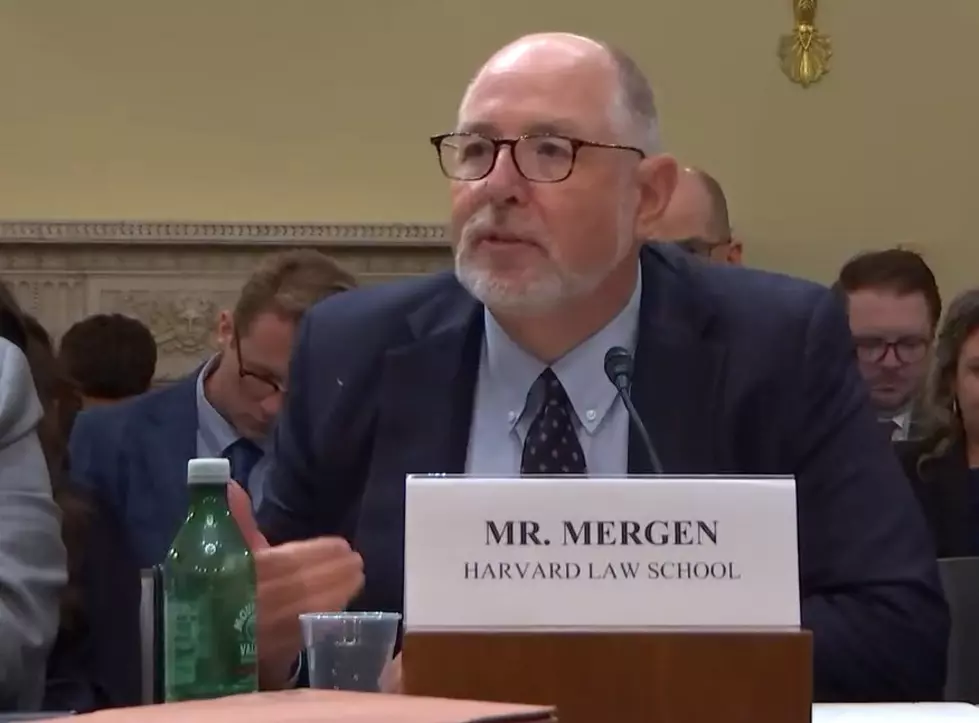
The House Natural Resources Committee held its oversight hearing Tuesday, and though the debate was robust, it was dominated by those wanting permitting reform. Among the four witnesses were a Tennessee construction company vice president, a Kentucky electric coop CEO, The Permitting Institute president, and a Harvard Law School professor. All but the environmental law professor testified that NEPA needed to be streamlined to allow corporations to permit their projects faster and easier.
Alex Herggott, president of The Permitting Institute, testified that the permitting system was broken, that there was too much bureaucracy and not enough transparency. He highlighted efforts of past legislation to reform permitting, including the 2022 Inflation Reduction Act and the 2021 Infrastructure Investment and Jobs Act. But those laws failed for various reasons, Herggott testified. NEPA also needs sideboards to limit litigation, because there are 55 other environmental laws the public can use to challenge various projects, Herggott said.
During the hearing, Huffman pointed out that Herggott said permitting should be streamlined for all energy projects. But when asked his opinion of President Donald Trump's order to stop permitting for offshore wind projects, Herggott said he wasn’t going to get in Trump’s way, just as he wouldn’t get in the way of a Democratic president that limited oil and gas projects.
Huffman then asked why Herggott had defended Interior Secretary Doug Burgum’s order that permits for all solar and wind projects have to go through the extra steps of getting Burgum’s approval. Herggott said elevation of such decisions to the Interior Secretary was good because lower-level employees would be too confused or stymied by numerous executive orders to make good decisions.
“Mr. Herggott, you have a credibility problem,” Huffman said. “You’re making a mockery of this notion that we need to streamline the regulatory permitting process. There’s a big governmental thumb on the scale for oil and gas and an absolute war on clean energy, and everyone knows it.”
Huffman turned to Harvard Law professor Andrew Mergen and asked if solar and wind projects needed more oversight than oil and gas projects. Mergen, who worked in the federal government for 30 years, said it made no sense to discriminate against the wind and solar industry. State directors in Wyoming, Utah and Nevada were fully capable of making decisions about any kind of energy project, Mergen said.
Mergen said NEPA has never been the sole or even primary cause for substantial delay in most agency decisions. In addition, Congress and the courts have produced big changes to NEPA in the last two years that could reduce permitting hurdles if only they’re implemented correctly, Mergen said.
In particular, at the end of May, a Supreme Court decision in Seven County Infrastructure Coalition v. Eagle County limited judicial review, saying courts should give agency findings and decisions substantial deference, and narrowed the scope of environmental analysis by limiting the need to consider certain cumulative effects.
“My overall point is the landscape has dramatically changed. A lot of the downstream and upstream cases that we’ve been talking about before 2025 fall away in light of Seven County,” Mergen said. “What we need is more data; more information about (environmental impact statements), more information about (environmental assessments) and more information about (categorical exclusions), so that we have a solid empirical look at what the impacts have been down the line. I think, when you peel away the layers on these litigations, it’s not about NEPA. It could be about the Clean Water Act. But NEPA gets the blame.”
Committee Chair Harriet Hageman, R-Wyo., said that after listening to Mergen, she’d concluded that he lived on a different planet than she had for the last 25 years, during which she had been “fighting against radical environmental groups as they have weaponized NEPA to stop every project and stop the ability to access affordable and reliable energy.” She followed up, saying Huffman “threw a tantrum attacking the administration for its wind and solar policies.”
“Everybody in this room knows that they are not affordable and they are not reliable. We have got to focus on the things that work,” Hageman said.
“We know how the system is being manipulated. There has been a war on coal, a war on pipelines, a war on oil and gas for a couple of decades now. That is the reality, and as a result, we’re in the situation that we’re in right now.”
In mid-June, a report from the Lazard investment bank found that renewable energy sources are the “most cost-competitive form of generation,” even without government subsidies, although the caveat is that coal-fired generation is currently regulated. Hageman’s inaccurate claims that renewables aren’t affordable and similar Republican talking points are what concern the Western Environmental Law Center and its 27 clients.
“Given Congress’ composition, the signal our legislators sent with the 2025 Reconciliation Bill, and the Trump administration’s virtual lock on policy, permitting reform in this Congress is certain to virtually eliminate public participation and crucial environmental and health protections, opening the door to unchecked public lands exploitation without consideration of impacts to ecosystems and the communities that depend on them.” said Kyle Tisdel, Climate and Energy Program director at the Western Environmental Law Center.
Contact reporter Laura Lundquist at lundquist@missoulacurrent.com.