

Downtown transportation project on track as costs climb
Martin Kidston
(Missoula Current) The final design detailing renovations planned for Missoula's downtown transportation grid is racing toward approval, but until that time, the project team is working to value engineer the details as delivery costs rise.
The city applied for and received a $24 million federal grant in 2023 to fund the Downtown Safety, Access and Mobility project (SAM), which seeks to address traffic flow and safety, install bicycle facilities, and optimize more than 20 traffic lights.
The project has been under design for more than two years and will go before the City Council in June for final approval. At that point, if approved, the city will send the work out for bidding and construction.
But before that, a number of challenges remain, primarily related to rising costs.
“There are decisions that have to be made in terms of the project scope,” said Mayor Andrea Davis. “This is a transformative project for downtown Missoula. It's one of the larger infrastructure projects Missoula has seen.”
The project's major elements include a reduction of lanes on Higgins Avenue from four to three between Brooks Street and Broadway. The work will include dedicated turn lanes and bike lanes at street level.

The project will also restore Front and Main streets back to two-way travel. More than 20 downtown traffic signals will be optimized to improve timing and coordination while other signals will be added, including one at Madison and Front.
Trail connections to Caras Park are also included.
“This is our opportunity for an investment in downtown” said Meagan McMeekin, the city's senior project manager. “This is our opportunity to make significant upgrades to improve that safety, accessibility and mobility for downtown users.”
Tough Choices
After receiving the federal grant, the City Council authorized an agreement with the Federal Highway Administration outlining the project's scope.
At the time, McMeekin said, the project's elements reflected the needs and desires of various user groups. Over the past two years, the project team has worked to balance those needs while working to keep costs on track.
As a result, a number of elements have been eliminated, pared back or deferred until a later time. Still, the project needs an additional $3 million to $5 million to complete the work, city officials said.
“We had a lot of work to do to reduce our project costs and minimize our impacts to downtown, while also adhering to the grant agreement,” McMeekin said. “We may need to bring additional money into the project to meet the needs of downtown. We don't truly know where we are with costs until we can bid this out.”
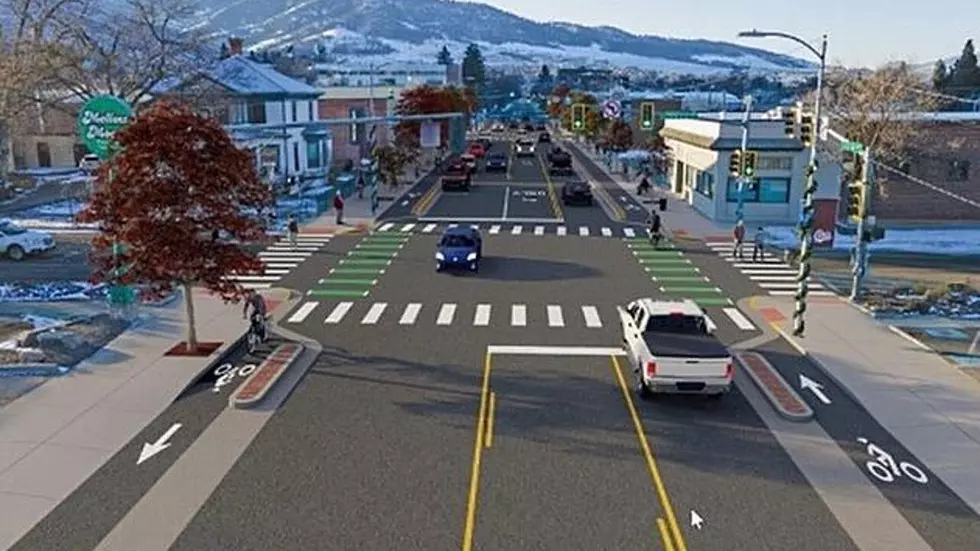
To address costs, plans for raised bike lanes on Higgins Avenue have been dropped from the project. Instead, the bike lanes will be placed at street level. The width of the Riverfront Trail was also reduced due engineering challenges and related costs.
Other items have been deferred including some trail extensions, lighting and certain pedestrian facilities on Front and Main streets. Many of those elements could be completed at a later date.
“As often happens when you put all your wants and needs on the table, the scope of the project grew,” said Jeremy Keene, director of Public Works and Mobility.
“We did reach a point early in the design where we were $10 million over budget. We went through a process of value engineering to figure out what items could be reduced in cost, what items could be deferred from the project and constructed later, and what things had to stay in the project to meet the grant requirement.”
While certain project elements have been altered, dropped or deferred, the project's core requirements remain intact, Keene said. Still, the city will likely seek additional funding to support certain project elements related to non-motorized transportation.
Some of that funding could come through additional federal support or tax increment from the Missoula Redevelopment Agency and its downtown urban renewal district.
“We have a very healthy district right now,” said MRA Director Ellen Buchanan. “This is our one chance to do this right downtown. We have a source of revenue in the district to help accomplish that without sacrificing any projects we have at this point on the horizon.”
Portions of the trail work are expected to begin this fall while much the transportation work will begin in 2027, the city said.
More Reading
Downtown transportation project gets final engineering approval
City inks $24M grant agreement for downtown transportation work
Contract moves Missoula's downtown transportation project closer