
EPA begins cleanup of mercury, metals at Philipsburg mill site
Laura Lundquist
(Missoula Current) The U.S. Environmental Protection Agency has finally started a Superfund cleanup of a century-old silver mill site near Philipsburg that is the one of the largest sources of mercury in the Clark Fork River basin.
Two weeks ago, the EPA announced it has started cleaning up mining contamination at the Rumsey Mill site about 3 miles southwest of Philipsburg. The Rumsey Mill was built in 1889 to augment two other stamp mills that the Granite Mountain Mining Company used to crush ore from which silver was extracted using mercury amalgamation. The resulting dust and tailings were full of heavy metals including mercury, lead, arsenic and selenium.
Unfortunately, the mill site is adjacent to Fred Burr Creek and has contaminated the creek for decades. Five miles downstream from the mill, the creek flows into Flint Creek, a tributary of the Clark Fork River. In 2009, University of Montana researchers identified Fred Burr Creek as being responsible for about 80% of the mercury that eventually reaches the Columbia River.
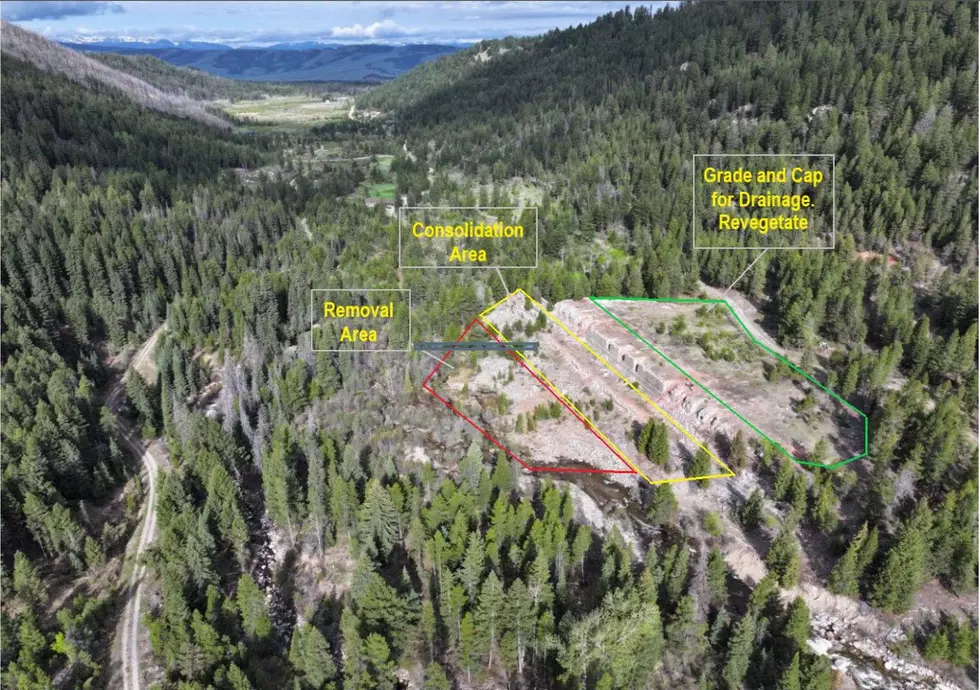
After overcoming some hurdles, the EPA was able to start assessing the site in 2021 and developed a reclamation plan that includes excavating areas that are contaminated by heavy metals. The EPA chose a “leave-in-place” strategy where the excavated material will be deposited and capped in an armored repository on the mill site.
There are pros and cons to leave-in-place cleanups depending on location. The pros include reduced cleanup costs - a big plus for a cash-strapped agency - and fewer concerns about liability since the toxins aren’t transported elsewhere. However, there can be concerns about contaminants potentially escaping the repository and the property has limited development potential.
After excavation, workers will backfill, stabilize and revegetate excavated areas with native seed to improve site stability and restore the riparian corridor along Fred Burr Creek. They will coordinate with Trout Unlimited advisors on restoration of the stream banks. Until now, only bare cobble and a few trees have covered the 50 yards between what remains of the mill’s foundations and the creek.
The EPA predicts the cleanup work will be complete by the end of November.
Trout Unlimited senior project manager Rob Roberts said he and the Granite Headwaters technical advisory group have been working with the EPA and Montana Department of Environmental Quality to address the biggest source of contamination in Fred Burr Creek for a decade.
“There was pretty intensive research that went into the site. They crunched it all together and came up with this remedy. I’m satisfied with it, in general. It took a long time to get here,” Roberts said. “We still have to look at potential downstream sources in the watershed. We think it’s similar to Silver Bow Creek and the Clark Fork, where other things have happened, material has washed downstream and deposited in other parts of the watershed. The water’s clean above this. It makes sense as a first step. I don’t know if there will be a second step or what it might be. But let’s get this project done, repeat the sampling, see what improvements were made and see what the next move is.”
The EPA has known about toxic contamination at the mill site since 1999 when the agency conducted an assessment after a subdivision developer uncovered mine waste while installing ponds. The EPA removed the tailings that were downstream of the mill site, completing the work in 2006. So it shouldn’t have taken so long to get to the final cleanup. Many question why the EPA didn’t clean up the entire stretch of Fred Burr Creek from the mill down. Part of it had to do with limited funding while another part was the EPA choosing to prioritize the removal of contamination from a future residential area. But also, for a number of years, the owner of the mill site refused to allow anyone access.
When Fred Burr Creek experienced significant flooding in 2016, floodwaters scoured the mill site, and water quality specialists worried that contaminated soil inundated the stream and was carried to downstream sites. The Granite Headwaters group wanted to collect water and soil samples in 2017, and 20 landowners downstream of the Rumsey site approved of the effort. They wanted to see the creek cleaned up. But Dan Kenneally, co-owner of Town Pump, refused to allow access to the mill site on his land, according to the Associated Press.
It’s unclear what happened between 2017 and 2021 when the EPA finally started its environmental assessment. But somehow Roberts and the Granite Headwaters group worked something out with Kenneally so that Fred Burr Creek can lose its standing as a leading mercury polluter.
Contact reporter Laura Lundquist at lundquist@missoulacurrent.com.