
Students, anglers save fish from death in ditches
Laura Lundquist
(Missoula Current) Ditches become deadly for fish once the water stops flowing, but an autumn army of volunteers are shuttling fish to the safety of the river.
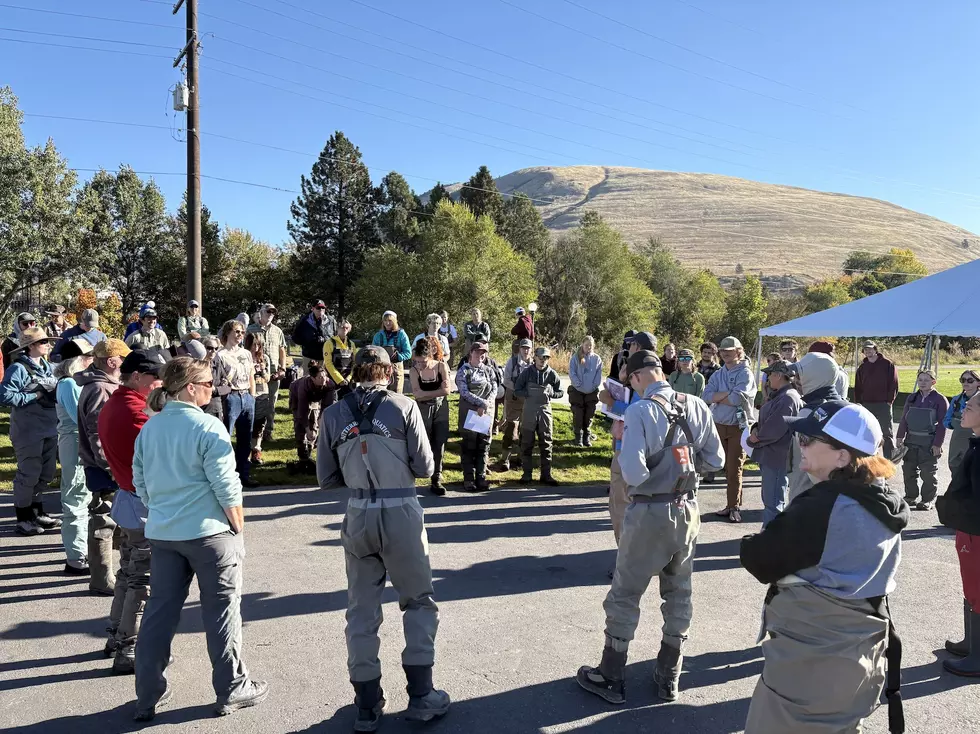
On Sunday morning, more than 50 people wearing fishing waders or muck boots gathered near the Van Buren footbridge to rescue fish trapped in the Missoula irrigation ditch after the headgate closed on Friday. Rob Roberts, Trout Unlimited senior project manager, thanked the group for showing up and added that the work wasn’t just about saving trout. Every fish they would catch - every trout, whitefish, sucker, shiner or sculpin - was part of the Clark Fork River ecosystem and deserved to be returned to it.
That’s what a handful or two of volunteers from Montana Trout Unlimited have been doing in the ditch near the headgate for the past few years. Once the headgate closes, the fish sense the lack of flowing water and either try to swim back to the headgate or down through miles of irrigation ditches to where they exit back into the river. Either direction was fatal in the past, as the fish either suffocated or floundered in shrinking puddles, becoming the proverbial “fish in a barrel” for small carnivores.
But this year, the call for help went out to University of Montana fisheries students, American Fisheries Society members, and members of Trout Unlimited and its state and local chapters. And dozens answered.
About half the group was from the university, so Roberts sent them to the deeper section of the ditch near the headgate, where the most fish tend to congregate. Over the next two hours, most of those fish made it back to the river, as two dozen boisterous students, led by two technicians carrying electrofishing backpacks and wands, caught and transported the fish out of danger.
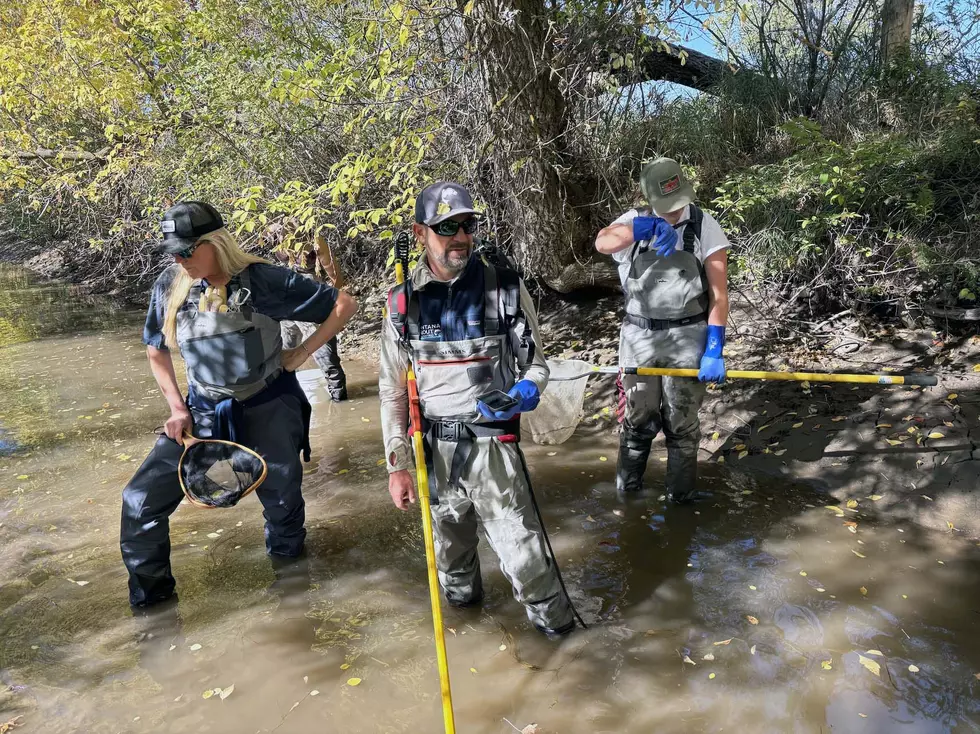
The other half of the volunteers moved farther west to see what they could find in the ditch that ran between California and Orange streets. Bill Pfeiffer, Montana Trout Unlimited outreach coordinator, donned an electrofishing backpack and led his dozen volunteers to a stretch of ankle-deep water that remained in the shade of golden willows, hawthorn and cottonwood trees west of California Street. He didn’t think he’d find much. The fish proved him wrong.
As Pfeiffer moved the electrofishing wand just beneath the surface of the water, inch-long fingerlings would occasionally boil up in what Pfeiffer called “a glitter ball.” In some deeper spots, suckers, whitefish and the occasionally coveted trout, most about 6-8 inches long, would pop to the surface. Volunteers made furious efforts to net them in the murky water before the fish recovered and darted away. Once caught, the fish were emptied into 5-gallon buckets of water, which filled quickly with dozens of fish. Other volunteers hauled the buckets up the banks and into a van that whisked them away to the river.
The process can be traumatic for the fish, and a few don’t survive the shocking and jostling. But one volunteer estimated that 95% of the fish recovered and were able to swim safely into the river.
“Not all the fish survive,” Pfeiffer told the volunteers. “But many more will survive than would otherwise, thanks to the work you’re doing.”
During one of the bucket exchanges, volunteer Heather Welsh asked why the fish were in the ditch to begin with. Welsh only recently moved to Livingston from the East Coast and wasn’t familiar with irrigation issues.
If the ditch had a fish screen across its entrance, fish wouldn’t be able to enter and volunteers wouldn’t be needed, Pfeiffer said. But the Missoula ditch network was built more than a century ago, before people knew the toll ditches take on fish. Now, as more people have become aware and are worried about all the threats that streams and fish face - low water, warming temperatures and pollution - they’re trying to do what they can to reduce those threats.
The entrance of the Missoula headgate is also in a problematic location, being across the Clark Fork River from Rattlesnake Creek. Pfeiffer said the trout that were rescued from the ditch probably grew up in the headwaters of Rattlesnake Creek, only to swim downstream into the Clark Fork and then take a wrong turn into the ditch.
In Washington, Oregon and Idaho, where people are trying to save Pacific salmon runs, ditches are required to have screens. So those states have programs, money and staff to install and maintain fish screens. But Montana is the only state that has an entirely voluntary approach for fish screens.
In recent decades, Montana Trout Unlimited has installed fish screens in a number of basins in western Montana, including Rock Creek and many tributaries of the Blackfoot River, where the survival of bull trout is a big concern. They’d like to do the same in Missoula and have started working on the Grass Valley Ditch that flows northwest off the Clark Fork River near Kelly Island.
But the Missoula Ditch has a big headgate that would be costly to replace with a fish screen, running to around a couple million dollars. Yearly maintenance costs also have to be factored in. Most irrigation companies don’t have that kind of money. And in Missoula, many of the ditches now run though subdivisions instead of farms so irrigation companies have fewer members.
But Sunday’s big turnout has Pfeiffer optimistic. The word is getting out.
“The momentum is building,” Pfeiffer said. “We might not have to do this for too many more years.”
Contact reporter Laura Lundquist at lundquist@missoulacurrent.com.