
Gianforte’s energy task force calls for PSC reform
Keila Szpaller
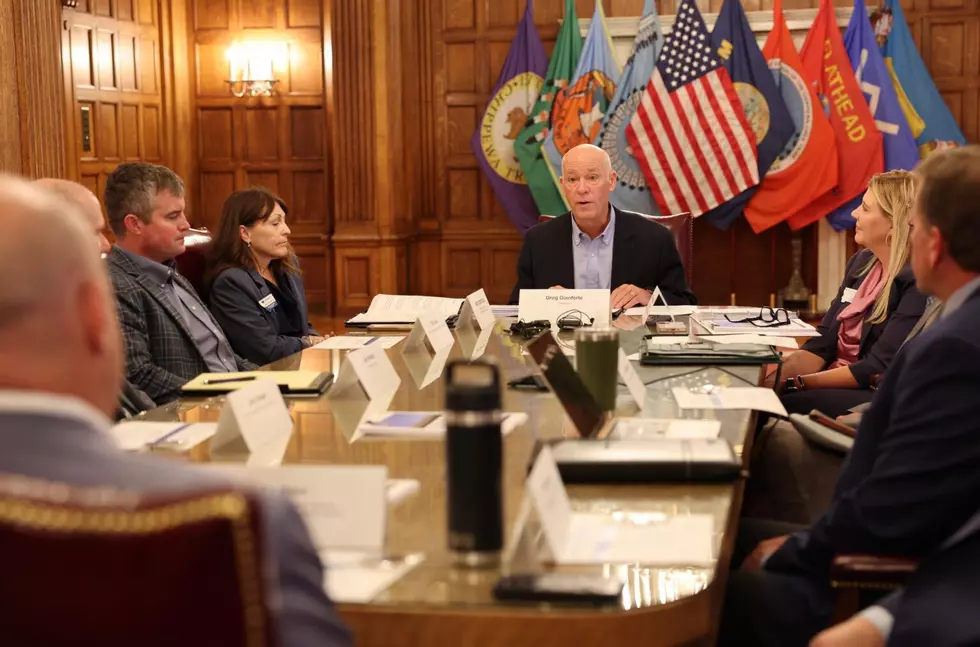
(Daily Montanan) The No. 1 recommendation from Gov. Greg Gianforte’s energy task force is to consider an appointed instead of elected Montana Public Service Commission.
Another recommendation is that the Montana Legislature and executive branch ensure the state has coordinated leadership on energy — possibly by bringing state agency leaders together into a formal group.
Tuesday, the Governor’s Office released a report from a task force Gianforte commissioned in September 2025 to address how Montana can increase the supply of affordable and reliable energy to meet rising demand and protect consumers.
In the report, the governor notes demand for electricity across the West is projected to increase by more than 20% in the next decade.
The report offers seven recommendations, including ones for the 2027 Montana Legislature to take up, and the governor said the strategies will help guide the state’s energy future.
“You have delivered a thoughtful, serious and practical report that addresses that question and confirms that Montana is well-positioned to lead,” Gianforte said in a statement Tuesday.
The first recommendation, to have Public Service Commissioners be appointed instead of elected, is already being discussed as a draft bill in at least one form, said Sen. Chris Pope, a Bozeman Democrat and member of the task force.
The PSC is made up of five commissioners elected by district and currently all Republican.
Pope said as individuals, members of the PSC are working hard and dedicated to public service, but as a team, the group has fallen “significantly short” and needs “more horsepower” when it comes to clear strategic outcomes for energy.
One hurdle to an appointed commission for Democrats is the governor is currently a Republican, and Democrats won’t want to hand him that power, Pope said. But he said the state needs to depoliticize energy.
“There needs to be a significant expectation that our Public Service Commissioners are some of the finest, most learned citizens in the state of Montana as it comes to energy policy from the start,” Pope said.
PSC Vice President Jennifer Fielder said she disagreed reform should come in the form of appointed commissioners.
Rather, Fielder said she believes elected officials need a better way to be accountable to professional standards, and the legislature could help by essentially outlining job expectations in statute.
In the past year, the PSC has been dealing with allegations of professional misconduct against Commissioner Brad Molnar. Gianforte suspended Molnar for one year, but Molnar is fighting the suspension.
“Some people (commissioners) believe you’re a free agent with no accountability,” said Fielder, who noted she was expressing her own opinion, not any position of the PSC. “If the legislature were to place accountability standards in statute with provisions for elected officials, I think it would be a win-win.”
Fielder said she has not had time to give the idea her full attention yet but believes it would resolve some of the concerns about the PSC.
The commission is addressing significant cases, including how to handle data centers and the proposed merger of NorthWestern Energy with Black Hills Corp of South Dakota.
The report from the energy task force also recommended energy leadership be appropriately organized in Montana, and Rep. Gary Parry, a Colstrip Republican, said he’s working on that proposal.
Parry, a member of the task force, said few states in the nation don’t have some type of energy authority, a body that will “steer our ship for the future.”
The report said the executive branch, including the PSC, Department of Environmental Quality, Department of Commerce, and other entities should establish an agreement to coordinate energy functions.
Parry said part of the idea is to bring together people who are working at the top levels of industry, environment and energy to set the direction for Montana’s energy future.
“We have an opportunity to either be at the table and be able to chart our own destiny or we’re going to be on the menu,” Parry said.
The report outlined a variety of other recommendations from the Unleashing American-Made Energy Task Force, including the following:
- Advance regional markets and transmission development. Have the executive branch provide long-term energy policy leadership, coordinate infrastructure planning and facilitate public-private partnerships.
- Drive economic development including by having the executive branch secure support from the U.S. Department of Energy to attract new industry, advanced manufacturing and value added resource development. Clarify how utilities serve large loads such as data centers.
- “Right-size” the energy tax framework. Ensure policies encourage investment in electric transmission, natural gas infrastructure and energy generation and storage. Implement energy tax policies that are predictable and preserve Montana’s pro-growth policy.
- Build innovative, reliable power supply. Cut geothermal permitting red tape, advance private sector partnerships to support geothermal power development, and develop policy to support nuclear energy development.
- Optimize grid utilization and control consumer energy costs. Increase options for households and small businesses to manage energy costs with investments and reduce barriers to private sector investment in energy-saving technologies.