
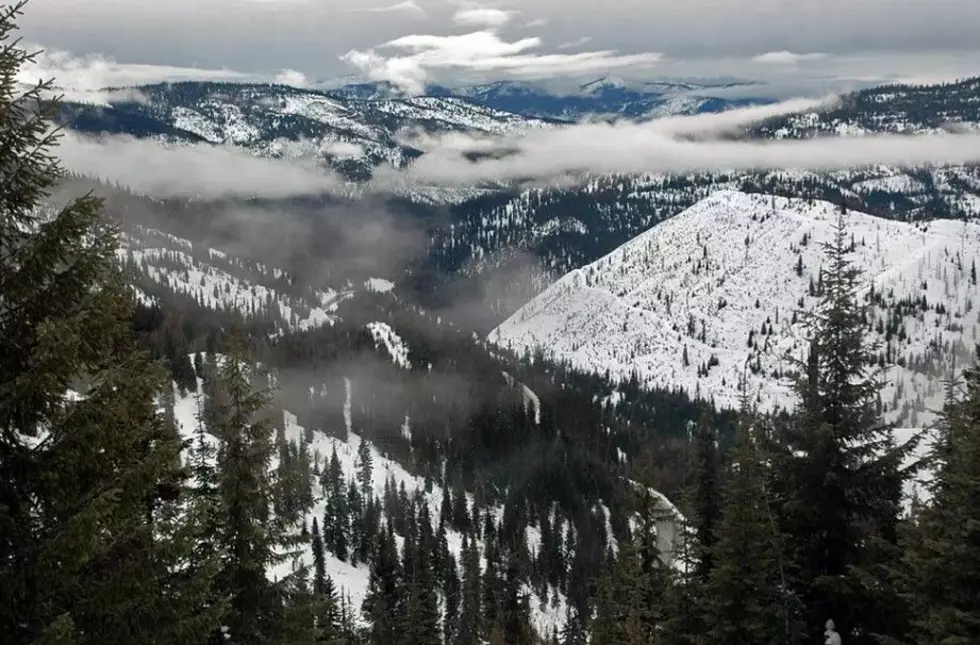
Montana, Idaho groups sue USFS over Great Burn wilderness
Laura Lundquist
(Missoula Current) Three conservation groups are suing the U.S. Forest Service for reducing the size and wildlife protections in the Idaho portion of the Great Burn Recommended Wilderness.
On Tuesday, the Great Burn Conservation Alliance, Montana Wildlife Federation and Idaho Conservation League sued the U.S. Forest Service in Central Idaho federal court over the changes that the Nez Perce-Clearwater National Forest made to the Great Burn Recommended Wilderness in its 2025 Forest Plan.
The new Forest Plan shrank the Great Burn Recommended Wilderness that had existed for 40 years by removing approximately 3,700 acres in two large areas to the north and south that are critical to wildlife, particularly mountain goats and wolverine. As compensation, the plan added new acreage on the west side of the area, but the groups say it’s marginal wildlife habitat.
In its justification for the Forest Plan, the Forest Service said it changed the boundaries “to fit existing (but currently unlawful) recreation use patterns and a desire to accommodate continued or future motorized and mechanized recreation opportunities,” according to the group’s legal complaint.
“The agency explained that portions of the historic (recommended wilderness area) were removed to preserve winter motorized recreation opportunities, allow future mountain biking, maintain access along the Fish Lake corridor, and create boundaries that it believed would be easier to administer,” the complaint said.
The Clearwater Forest - which was merged with the Nez Perce Forest in 2013 - published travel management decisions in 2012 and 2017 that closed the Hoodoo area to motorized access, which should have included snowmobiles and mountain bikes.
The organizations said there would have been no winter motorized recreation to preserve had the Forest Service not ignored the travel management plan and the requirement to manage recommended wilderness in a manner to preserve wilderness qualities until Congress takes action.
The groups also point out that the Lolo National Forest is still in the process of writing its Forest Plan, which affects how the Lolo Forest manages its portion of the recommended wilderness. If the Lolo Forest selects a more ecologically oriented management strategy, the resulting patchwork of motorized and nonmotorized areas will be harder to manage.
“Our members hunt, fish, and explore the Great Burn, and they expect the rules protecting it to mean something,” said Frank Szollosi, Montana Wildlife Federation executive director, in a statement. “Snowmobiles have entered closed areas for years. Now, the Forest Service has redrawn the recommended wilderness boundary to accommodate that use. That rewards rule-breaking, undermines the agency’s own authority, and puts critical wildlife and wild country at risk.”
The groups argue that the habitat that the Forest Plan eliminated from the recommended wilderness is critical for wildlife, especially wolverine and mountain goats. It’s really difficult for hunters to draw mountain goat tags because the populations are few and far between, which is one reason that Montana Fish, Wildlife & Parks submitted comments on the Forest Plan changes to the recommended wilderness.
FWP said that mountain goats were more common in the Great Burn area until the early 2000s and could be found in at least five drainages. Now, only one population remains and is found in the Trout Creek drainage. FWP said it needs to be protected and connectivity should be maintained with another herd in Blacklead.
But research has shown that mountain goats are susceptible to being disturbed by recreational activities, particularly in winter when they’re already struggling, and they may abandon areas of high quality habitat to get away from the disturbance. That, combined with the climate change effects of drought and warmer summers, can take its toll.
However, even though the Lolo Forest has proposed that mountain goats be considered a species of conservation concern, the Nez Perce-Clearwater chose not to.
“FWP is concerned that winter motorized use in the Hoodoo could have direct negative impacts on the Blacklead herd and thereby disrupt connectivity with the Trout Creek herd… Idaho Fish and Game states that increasing snowmobile and snow bike access is a concern to mountain goats in this area,” the complaint said.
When it comes to wolverines, the Great Burn area has been identified as containing “some of the highest quality wolverine habitat in the contiguous United States” due to its high-elevation terrain and persistent spring snowpack, according to the complaint. Wolverines can use the area as a migration corridor or as denning habitat.
In 2018, the U.S. Fish and Wildlife Service issued a species status assessment that depended on Forest Plans in general to provide protection for wildlands that wolverines depend on. But five years later, the agency looked more closely at various forest plans and found them to be inconsistent outside of wilderness areas.
The 2025 Nez Perce-Clearwater Forest Plan itself says it relies on existing wilderness and Idaho roadless areas to serve as wolverine habitat. That assumption allowed it to remove protection from almost 14,000 acres of primary wolverine habitat in the recommended wilderness, opening it up for future snowmobile use, according to the complaint.
“The Great Burn’s value extends far beyond any single boundary on a map, and protecting it means conserving the connected habitats wildlife depend on to survive, including the high-elevation areas critical to mountain goats and wolverines. By removing protections for these important areas, this plan moves us in the wrong direction at a time when these species and the landscapes they depend on need stronger protections,” said Hayley Newman, Great Burn Conservation Alliance executive director, in a statement.
Contact reporter Laura Lundquist at lundquist@missoulacurrent.com.