
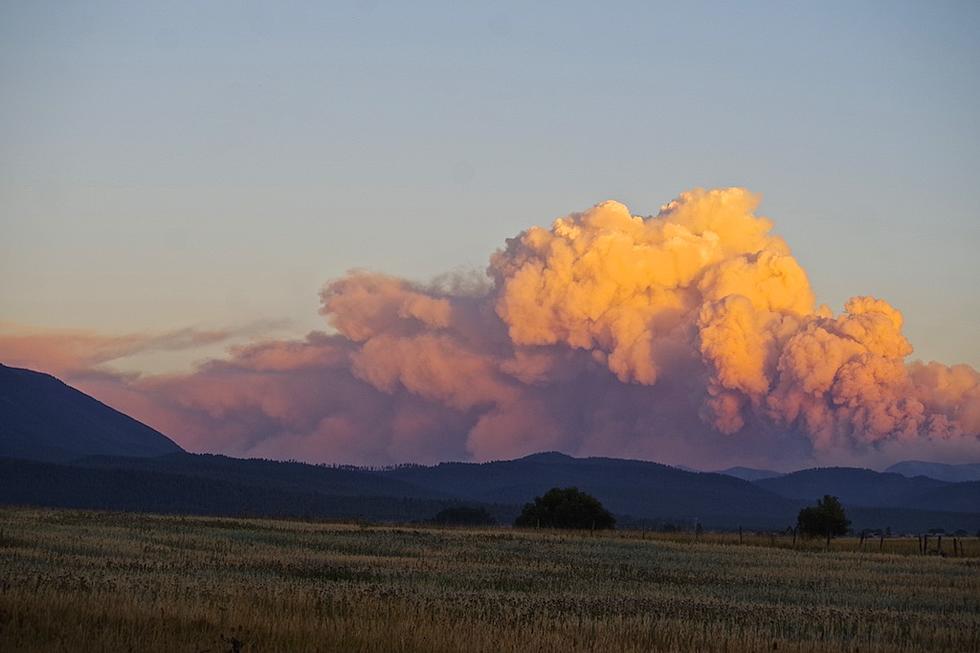
UM ecologist: Western forests need high-severity fire
Laura Lundquist
(Missoula Current) Forest managers claim logging projects are needed to restore Western forests and protect them from catastrophic wildfire, but a former University of Montana professor has research to show that isn’t so.
UM ecologist Richard Hutto frowns every time he hears U.S. Forest Service managers and others make the black-and-white comparison of wildland fire as “good” if it’s low intensity and “bad” if it’s high intensity. Over the past two decades, the Forest Service has taken to defending its logging projects by saying the projects will reduce the risk of wildfire and improve forest health.
The Trump administration is also using those reasons to justify the elimination of the 2001 Roadless Rule. Almost a year ago, when Agriculture Secretary Brook Rollins proposed rescinding the Roadless Rule, she repeated the mantra of “bad” wildfire, saying roadless areas - which usually have marginal timber - needed to be logged because “properly managing our forests preserves them from devastating fires.”
“If you haven’t heard the story, you live under a rock. (They say) there’s ‘good’ fire and ‘bad’ fire,” Hutto told a crowd supporting the Roadless Rule a few weeks ago. “But I’m here to tell you, they’re wrong. The story is misleading. Most western conifer forests have always harbored mixed- to high-severity fire. And by most, I mean 85%, according to Land Fire database. Only 15% - mostly in Arizona and New Mexico - is low severity.”
For example, Bitterroot National Forest Supervisor Matt Anderson recently introduced his decision to approve the Bitterroot Front project by saying the forest “has experienced repeated high-intensity wildfire events. This type of wildfire can burn through the canopy of forest stands, killing mature trees, damaging or eliminating wildlife habitat, and threatening human safety and property.”
Anderson added that when the Forest Service started suppressing fires in the 1920s - as it still does today - vegetation built up that can lead to high-intensity fires, which he said aren’t natural. Only low-to-mid-intensity fires are “beneficial” to maintain the forest, according to Anderson’s decision.
Hutto disagrees, saying high-intensity wildfire can also be beneficial, because most western forest ecosystems depend on the disturbance that only high-intensity wildfires can create. The wide variety of species that can be found in forests prove that wildfires of all severities have burned across the landscape for centuries, creating the ecosystems that exist today.
“Black-backed woodpeckers occur almost exclusively in severely burned forest. You don’t evolve a behavior to be restricted in your habitat use if you haven’t been associated with that habitat for years. I don’t mean hundreds or thousands of years - I mean many, many thousands of years,” Hutto said. “What about morel mushrooms? They're in severely burned forest."
Over decades, forests go through several stages of maturity - from seedlings emerging from ground cover to old-growth stands - in a process called succession. The black-backed woodpeckers and morels need early-succession forest while other species use forests that occur in later stages.
But people shouldn’t think of succession as a linear process, Hutto said. Instead, it’s a series of overlapping circles. The healthiest forests contain regions in various stages of succession, where some are mature and others have been disturbed so they are starting over. That means the entire range of forest species can be found across the landscape.
Research has shown that other forms of disturbance - e.g., beetle kill or logging, even thinning - don't produce the same diversity of species as severe wildfire, and succession doesn’t follow the same path.
“Most of the things that like the trees in these severely burned forests need pretty large densities - hundreds of trees per acre. That’s important. Because if you thin a forest and then it burns severely - and it will, because severe fires are dictated by weather, not fuel - surveys show all those magic species aren’t there. So you are compromising the integrity of the system if you start messing with it, even before the fire,” Hutto said. “The National Forest Management Act, for example, says you can have multiple-use if and only if you don’t compromise the integrity of the system. The only way to maintain the diversity of all these stages is to keep it all on the landscape.”
“Fire is going to happen no matter what. Whether we continue to have intact forests is the question,” Hutto said.
Hutto explains all the wildfire and succession research in his book, “A Beautifully Burned Forest: Learning to Celebrate Severe Forest Fire” published last year.
Contact reporter Laura Lundquist at lundquist@missoulacurrent.com.