
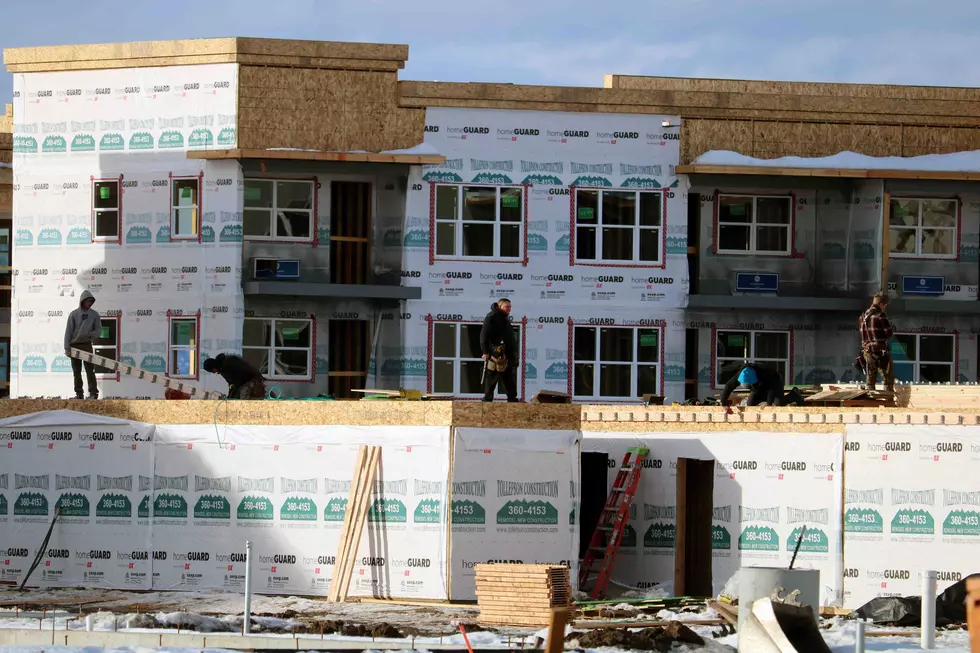
Housing permits slow in Missoula despite population growth
Martin Kidston
(Missoula Current) The number of final plats and building permits issued in Missoula slowed in 2025, though the natural change in population continues to increase, driven partially by a small “baby boom.”
The slow growth in population prompted the city to include in its new growth policy the need to create nearly 1,500 new homes a year for the next decade – a figure not achieved since 2021.
In fact, the number of preliminary plats in the city dropped in 2025 to 110 while the number of final plats fell to 50. The county also saw a drop in its number of preliminary plats to 14 and the number of final plats to 42.
The figures were included in the Missoula Organization of Realtors' annual housing report.
“When the final plat infrastructure has been installed, that's when you see the subdivision go in,” said Paul Forsting, a senior land-use planner at IMEG Corp. “We saw significant decline in 2025 – about an 88% decline in approvals coming out the city and county.”
The number of residential building permits issued last year also represented a sharp decline from 2023 and 2024. The city fell below its median average and permitted only 587 units. The county saw a slight increase in residential permits, issuing around 337 across all housing types.
“The 12% increase in units came from the county and that's the duplex project near the Wye,” Forsting said. “One developer is doing that. It shows how small the market activity is. One developer can really push that number up.”
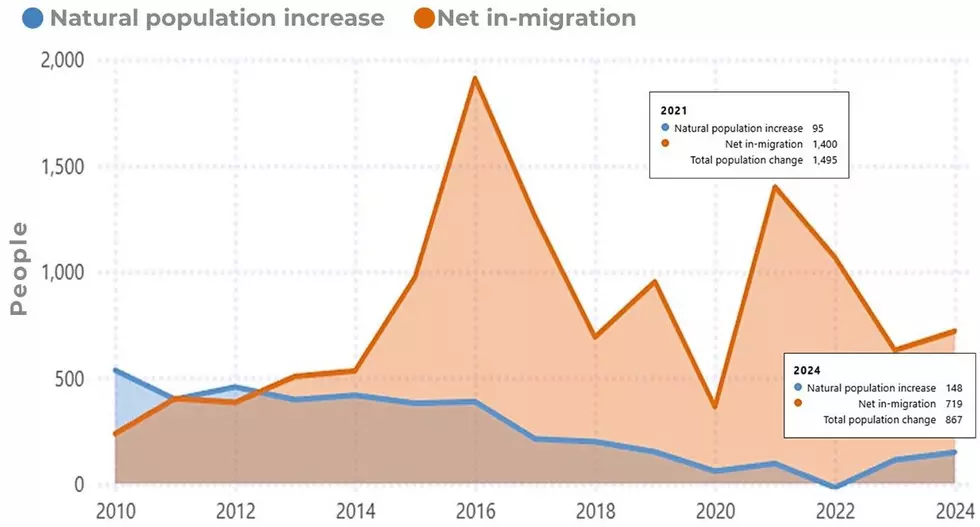
The decline in housing figures doesn't gel with Missoula's current and future housing needs. Net in-migration in 2025 brought 719 new residents to the city. The increase in Missoula's natural population has also steadily increased from 2021.
The figure represents a boost in new births and in-migration and a slowdown in deaths and out-migration.
“It's been driven by a little bit of a baby bump,” said Derek Sheehan, an economic specialist with the Montana Bureau of Business and Economic Research. “Early indications in 2025 indicate around 500 more births than deaths. Missoula will likely rank second in the state in (baby) production with around 1,700 births.”
Elderly Missoula residents aren't leaving, he added.
“We're also keeping our older Montanans,” said Sheehan. “Montana has a pretty low-to stable number of deaths, with around 1,200 a year. This pattern of higher birth rates and low-to-steady deaths is observed across most of Montana's urban centers.”
Still, the state as a whole is seeing population rates below replacement and a negative number of natural change. The slow population shift to the state's urban centers, including Missoula, will require more housing.
“We need that (1,500 new units) for 10 to 15 years, then more than we're doing now to get us to a stable housing number,” said Forsting. “We've often speculated how many houses we need to create. The city put that number in its growth policy.”