
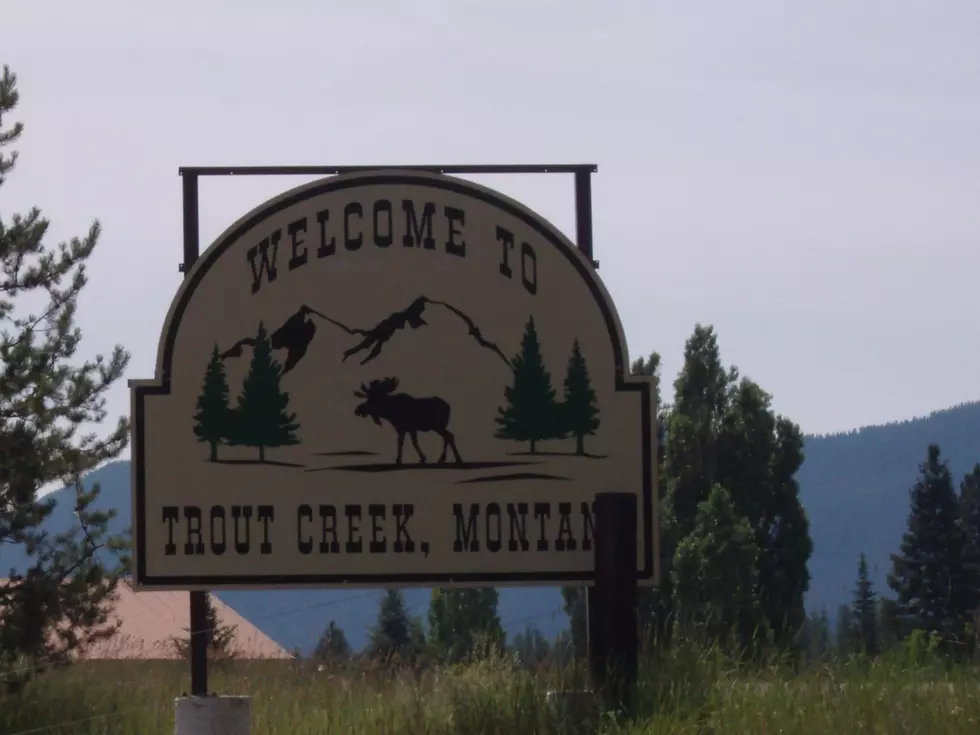
Montana Viewpoint: My home town
Jim Elliott
I moved to Trout Creek over fifty years ago. I got to know and like a lot of people, woods workers, millworkers, working people in general. It was not an easy life for a lot of them, they worked hard, and they played hard too. I felt like I belonged here. I worked hard too, and I played hard. Sometimes I played a little bit harder than I worked, and sometimes it balanced out the other way, but I got stuff done. So did they.
The jobs here depended on the woods industry. There were seven sawmills in Sanders County and lots of logging outfits. In Trout Creek Ed Mulick had the only bar in town and it got busy at shift change—real busy. On payday they could cash their checks at Ed’s bar, the Wayside, “the finest bar in town”.
No one seemed to have a lot of money if you judged people’s wealth by what they drove, which was mostly old pickup trucks. Even the newer ones had been scraped, dinged, and dented—woods trucks, used hard. If you saw a new pickup, you knew that it would belong to Dick Vincent, a local mill owner and well-liked high roller.
There was Bob Eaton who drove, as the spirit moved him, either his baby blue 1952 chevy pickup or his same year baby blue Chevy Bel Aire. One year the Legislature decided that cars over 25 years old were antiques and should be assessed by their value as antiques rather than actual value. That was the year Bob couldn’t afford to register either of his rigs and I believe it was then that he began to drive his lawn mower the few blocks from home to the Wayside where he nursed a couple of beers to pass away the afternoon.
And Jimmy McLinden who drove his tractor to town. That was fine, except he had to cross the long Clark’s Fork River bridge to get there which held up traffic. It seemed he either didn’t have, or couldn’t get, or didn’t want to get, a driver’s license. The Sheriff was frustrated because Jimmy held up traffic and would threaten to ticket him but Jimmy won the argument by pointing out that farm vehicles could be operated on the highways by unlicensed drivers. The Sheriff then countered with the rest of the law which said, “when engaged in agriculture” which did not include driving to the bar for lunch. Jimmy conceded that and so hitched his baler to the tractor for the drive to town. In the winter you could see Jimmy’s tractor-baler outfit parked in front of the Wayside.
The Trout Creek Café was a warm and welcoming little place that had been built years back by transporting and connecting three buildings formerly of Larchwood, the site of the original Trout Creek. On early Saturday mornings Liz Glackin would be serving breakfasts and coffee wearing hair rollers and bathrobe and bantering gaily with her customers in her broad Scottish accent. Helen Stout, from White Pine worked there, too. She was a large, jolly woman who embarrassed easily. She once asked me to do something, and I said I would “try.”
“Well, that’s all a steer can do,” she said, and then realizing what that meant she rushed, blushing, into the kitchen.
I miss those days. There are still a few of us around and when I feel nostalgic I go down to the Tire Shop and throw bull with the very best of the best of throwers sitting around on piles of new tires and almost broken chairs. It is old, but it was painted once—sort of—and is the only building in town that hasn’t changed much in the years I’ve lived here except that Bruce, who once bucked hay for me has inherited the operation of it from his father, the legendary Mel, whose plastic chair, in all its faded orange glory, still sits in the corner where the ghost of Mel silently comments on the demise of a rough and tumble Trout Creek.