
Montana Viewpoint: Our ‘Institutions’
Jim Elliott
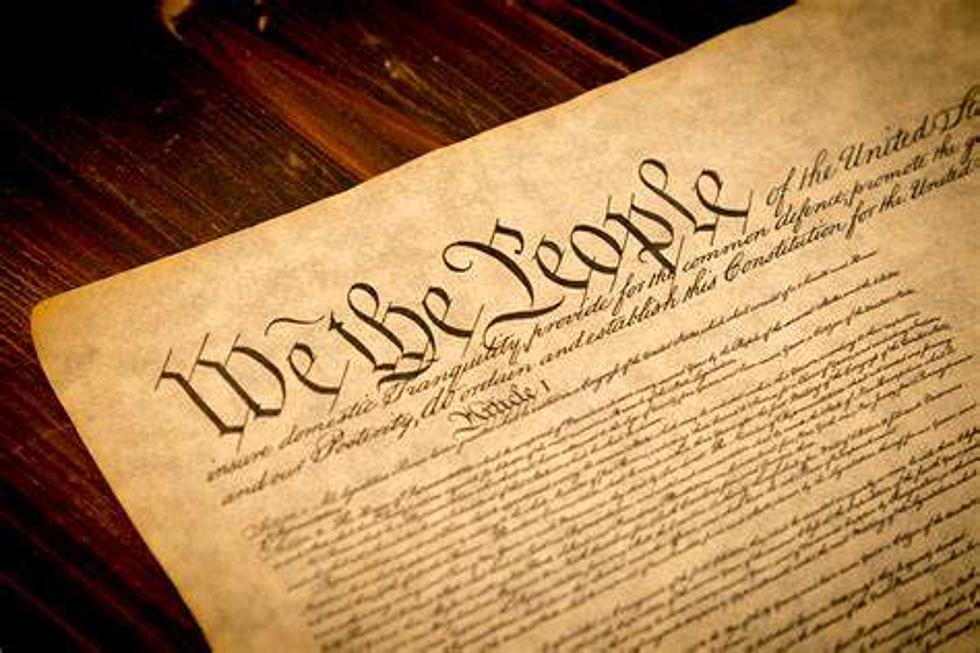
There has been a lot of talk for the past few years about protecting our “institutions” like the Constitution or the “Rule of Law”. So, what’s an institution? Easy question, but difficult to explain.
When I first began to write newspaper columns in 1989 it was because I was a newly elected Montana state representative and needed to communicate with my new bosses, the people of Sanders and Lincoln counties. I was encouraged in this by my predecessor in the office, and it was good advice. At first I wrote columns only during the legislative sessions but it soon evolved into a biweekly column that I kept up over the years. In 1992, I think, I began distributing my articles to weekly newspapers across Montana.
Now, I realized, I had a responsibility to my readers to be informative and speak plainly. Explaining what was going on in the legislature wasn’t always easy. I could write the facts down easily enough, but the “why” of things was more difficult. And the “why” was more important.
The hard part of writing was that, in the beginning, I didn’t fully understand the abstract issues that I wanted to explain. You know how it is when you “know” something but can’t really explain it? I don’t remember the particular concept that I struggled with back then, but there was one, and I realized that if I was going to explain it to someone else I would have to explain it to myself first. Which I did.
There are still some concepts that I struggle to explain to myself, and the one that is troubling me these days is the concept of an institution. I was helped along the path of understanding a few years back when I was a member of a hospital board and heard a speaker at a conference talk about serving the “institution” of a hospital. His example was about what actions a hospital Board of Trustees should take in a crisis situation. In the speaker’s case it was an outbreak of a disease in the hospital he ran.
The duty of the trustees, he explained, was not to protect people from negative publicity or to cover up the problem. The duty of the trustees was to protect the integrity of the institution itself. The institution wasn’t a physical thing like buildings or people, the institution was embodied in the very purpose that the institution was created to fulfil.
For me, it’s easier to explain what an institution is by talking about small institutions, like schools.
I‘ll use as an example the case of a troubled school in a small town in a rural state. A school is, in many ways, the soul of a community. When a school closes, the demise of the town will not be far behind. It is an institution to be defended.
Embezzlement and mismanagement of funds are events that many small public institutions face. A lot of it is due to the closeness in which the townspeople live and the lack of desire to call out inappropriate financial behavior because, hey, they’re our neighbors. So, when someone points out irregularities, there is a desire by many to defend the school against the accusation.
When a rural school is in trouble, the town may be in turmoil over who to blame and how to either fix it or ignore it. But on one thing they are united, and that is to keep the school going. They believe in the institution of the school. The school defines the town. It defines the people who were students there. It stands for the community. It stands for the common good.
Using the school—or any other institution—for personal gain violates the trust that the community has placed in the school and those who run it. It needs to be met head on and repaired so that future generations may be served.
What’s good for the institution of a local school is also good for big institutions like Congress and the Constitution, which, like the small rural schools, are good things to preserve. So, if we’re willing to work together to keep our small institutions working well, let’s do the same for our big ones.
Montana Viewpoint has appeared in weekly and online newspapers across Montana for over 30 years. Jim Elliott served sixteen years in the Montana Legislature as a state representative and state senator. He lives on his ranch in Trout Creek.