

Harmon’s Histories: Remembering K. Ross Toole, Montana’s most honest historian
By Jim Harmon
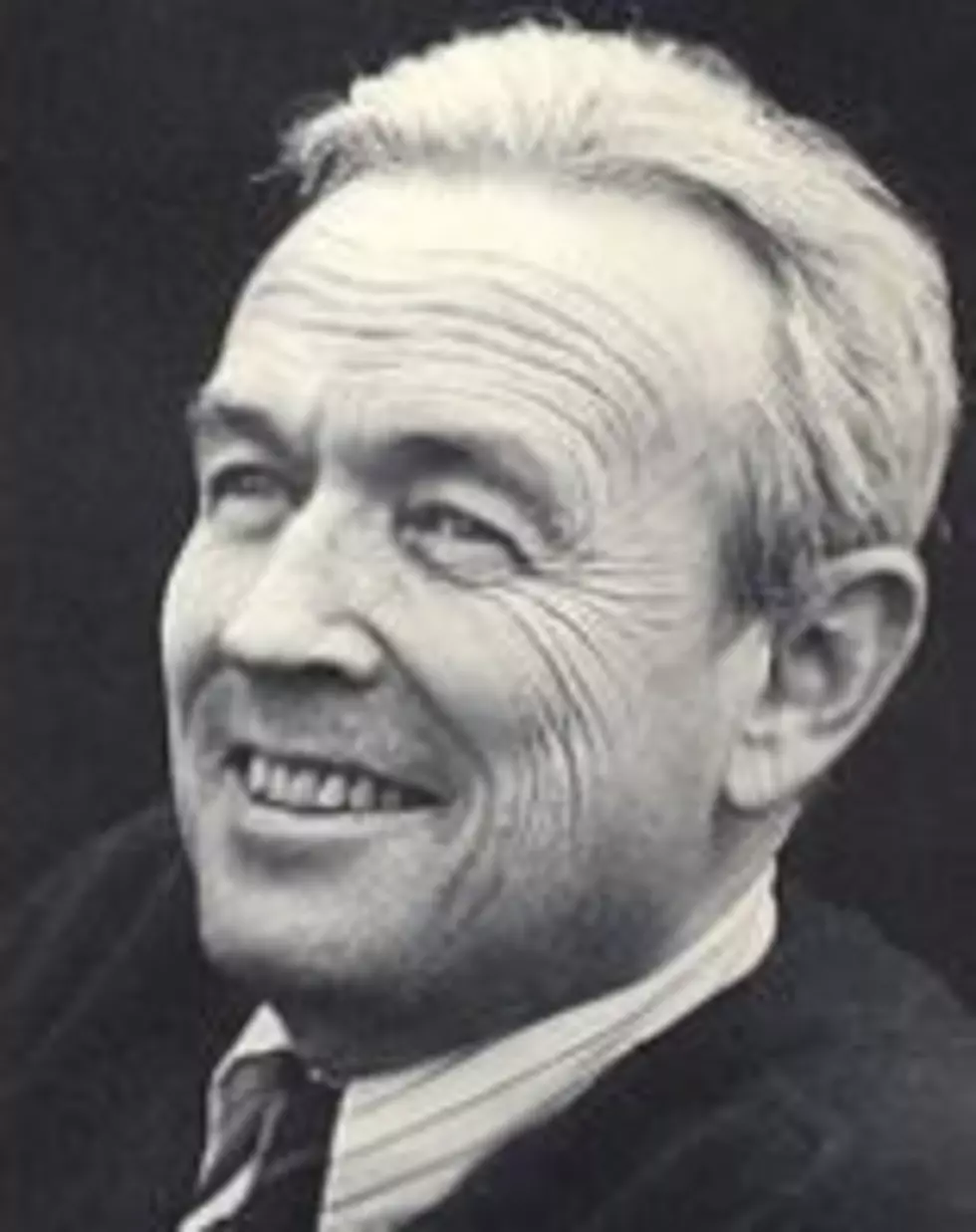
I never met Kenneth Ross Toole, but I wish I had. He was, to me, Montana’s foremost historian. Students who took his classes at the University of Montana would most likely agree.
He grew up on his family's K-Bar-J ranch near Red Lodge. He held a B.A. and M.A. from the University of Montana; a Ph.D. from UCLA; was director of the Montana Historical Society; and was a prolific author.
But it was his time as the Andrew B. Hammond Professor of Western History at the University of Montana (1965-1981), that most folks remember.
His lectures and his book, MONTANA: AN UNCOMMON LAND, painted the state as a "plundered colony," whose natural resources were sadly extracted by outsiders.
MQTV (Montanans for Quality Television) videotaped Toole’s final lectures at U-M, when he was dying of lung cancer. Those recordings are still available, free to the public, at this link. I encourage everyone to listen to, or watch, them.
Toole traces Montana’s history from the first migration, 13,000 to 15,000 years ago, of Orientals crossing the land bridge from Siberia to Alaska, and slowly migrating southward following game animals to those who “entered the western Montana valleys from the southwest desert regions of Utah and Idaho.”
“Of the native tribes now living in Montana,” said Toole, “only the Flathead, Pend Oreille, and Kootenai lived in the state during prehistoric times.” The rest were eastern tribes forced westward by the White man’s pursuit of “manifest destiny.”
Today, we think of the Salish and Kootenai being western Montana tribes, but Dr. Toole reminded us that native people did not settle in the mountains. As he put it, “The mountain climate was not so salubrious then, as it is now. You've still got glaciers rattling around in these canyons!”
Even the Indians encountered by Lewis and Clark were relative newcomers. Toole said, “Not a single tribe of Plains Indians, that is east of the Continental Divide, was located in Montana on the plains prior to 1600. Not a single Indian tribe.”
The Indians, noted Toole, were pushed westward by colonists. In a domino effect, one tribe “would push on the tribe immediately to their west, so that very shortly after the beginning of settlement on the Atlantic coast, violent upheavals and changes were taking place among the Indian people on the Great Plains.”
For instance, the Cheyenne (Aldonkian in origin) came from “as far east as New England, pushed out onto the hostile Great Plains by those who were pushing them from behind in turn.”
The Plains Indian’s major food source, the bison, were said to number 30,000 to 80,000 in Montana and 30-million to 80-million on the Great Plains. That tickled Toole, “I was always curious about that. Who the hell counted them?”
Far and away the largest change came in the 18th century with the introduction of the horse. It allowed Indian people to become mobile – no longer limited to hunting and exploring the short distances one could travel on foot.
For the Europeans, the horse made it possible to cross the continent, which was all that stood in the way of discovering the Northwest Passage, their “age-old desire to trade with the Orient.”
“We always say that we whipped the Indians. That's like saying we whipped the North Vietnamese. No, we did not whip the Indians militarily!
We whipped them in other respects with smallpox and whiskey and other devices. We never beat the Indian militarily. You do remember George Armstrong Custer?
It was that sort of honesty about American and Montana history that drew thousands of students to Toole’s classroom at the University of Montana.
Although K. Ross Toole would soon die of lung cancer, he preferred to say he was “living in spite of it.”
In an April 10, 1980 interview with the University of Montana’s student newspaper, the Kaimin, Dr. Toole said he wished to spend his last months “doing the same thing he has always been doing, passing his knowledge on through lectures and writings.” And so he did.
It was his brutal portrayal of Eastern industrialists meddling with Montana and its future that became his legacy. One of his specific targets was the Anaconda company. More on that next week.