
Cattle and lodges survive Sand Creek wildfire
Laura Lundquist
Both hotshots and horsemen have helped in the face of the largest wildfire in Montana, and the good news is an historic hot springs and ski lodge have survived.
Western Montana has had to endure wildfire smoke, but hasn’t, for the most part, suffered from the rash of wildfires that plague Washington and Oregon. But a pair of fires are making up for that.
On Aug. 1, the Sand Creek Fire was detected on the western side of the Pioneer Mountains about 7 miles southeast of Wisdom, but it had already burned 10 acres and quickly grew to 400. Firefighters say containment is much easier if early detection allows them to deal with a fire that’s an acre or less.
But on the afternoon of Aug. 1, the flames were already crowning and torching among the subalpine fir. The day before, the Bobcat Lakes Fire was detected burning about 5 miles north of the Sand Creek Fire. How the two fires started is still undetermined.
“This summer, we’ve responded to 107 fires within our dispatch area. Every one of those fires has received a full-suppression strategy. Out of 107, we’ve caught 104 of them in that initial attack period, that first 48 hours,” said Corey Lewellyn, Beaverhead Deerlodge National Forest acting supervisor. “Unfortunately, there’s three we weren’t able to catch. One is the Moose Fire in the Philipsburg country, and unfortunately, the other two are these. Unfortunately, we didn’t have a very good window to get in there, let alone how fast they grew.”
Both fires were burning in the West Pioneer Wilderness Study Area, so no structures were in danger at the time. But cattle were out on some of the area’s grazing allotments that were threatened as Red Flag conditions on Aug. 1 pushed the fires east.
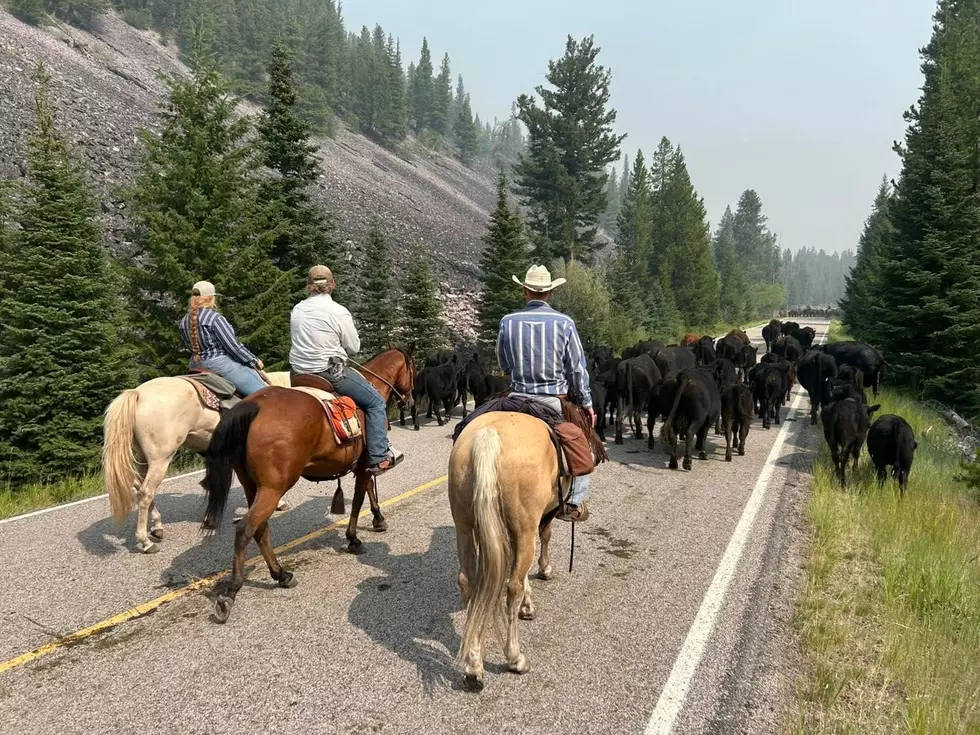
By Aug. 3, the fires had grown to around 1,000 acres each. So three members of the Mile High Back Country Horsemen based in Butte rode into the study area to help move 140 cows out of danger. Meanwhile, the Forest Service closed campgrounds along the Pioneer Mountains Scenic Byway and worked on structure protection.
For the next few days, the fires burned slowly in the steep terrain. The Sand Creek Fire had run into an old fire scar on its north side from the 2011 Stewart Fire and grew only about 600 acres over three days. But conditions prompting another Red Flag warning for gusty winds and low humidity on the afternoon of Aug. 6 changed that.
By the following day, high winds out of the north had caused the Sand Creek Fire to expand south to an estimated 5,300 acres and the Bobcat Lakes Fire was up to 4,300 acres. The Forest Service closed the Pioneer Mountains Scenic Byway, which winds north-south through the Pioneer Mountains between Polaris and Wise River.
Wind-blown embers from the Sand Creek Fire contributed to spot fires in the Bear Lake area where cattle occupied other grazing allotments. Jamie Lode was monitoring the cattle in the area for the Holland family, but her Garmin wasn’t working so no one could contact her on Aug. 6. Ken Holland went in early Friday morning to check on her and decided they needed to move the cattle out a day earlier than planned. Two escape routes were already blocked either by fire or downfall, leaving only the Pioneer Mountains Scenic Byway.
“It’s hard. I know there are lots of other people going through it too. But it’s quite something when it’s happening to you and to the people you care about. I work for an incredible family. These guys are the best people in the world. So we’re going to go see if we can get these cows out of here tomorrow. So pray really hard that we can find them,” Lode said in an Aug. 7 video post. “It’s going to be a big day tomorrow.”
Once again, the Forest Service called on the Mile High Back Country Horsemen. On Saturday, it was an early wake-up for six volunteers who rode into the meadows near Bear Lake to rescue 500 cow-calf pairs, including cows from a neighboring allotment. They drove the animals about 22 miles north to safety as the hillsides smoldered next to them from the Bobcat Lakes Fire and helicopters flew overhead. They finally dismounted at 8 p.m., according to their social media post. “Tired horses, riders and dogs! The cattle are safe,” according to the Mile High Horsemen post.
One emergency was over. But at the same time the cows were being moved, fire behavior was becoming more extreme and the southeastern edges had started to near private property and structures. So at 1 p.m. on Saturday, the Beaverhead County Sheriff upped the evacuation status from “ready” to “set” for Elkhorn Hotsprings, Maverick Mountain Ski Area and communities on the north end of Grasshopper Valley along the scenic byway. It was a matter of only two hours before the status was moved to “GO,” as winds pushed both wildfires east.
By Sunday, the Sand Creek Fire had doubled over three days to 11,700 acres and the Bobcat Lakes Fire was 7,000 acres, although firefighters were able to keep both fires from crossing the Scenic Byway. Additional evacuations were ordered.
Winds continued to blow the Sand Creek Fire east, so it had grown to almost 20,000 acres when it reached Maverick Mountain Tuesday morning at which point, firefighters’ primary focus became structure protection from Maverick Mountain down to Elkhorn Hotsprings along the Scenic Byway, according to Inciweb reports.
Owners of both Maverick Mountain and Elkhorn Hot Springs had to evacuate but were able to watch their properties using remote cameras, and they were glued to their feeds as the fire crested the mountain on Tuesday. But by 11 a.m., the owners of Maverick Mountain posted that the Maverick ski lift had sustained damage but they didn’t know to what extent.
Beaverhead County Sheriff Dave Wendt drove up to assess the situation Tuesday night and came back with good news. He reported that the Elkhorn Lodge had survived but the same couldn’t be said for all the surrounding trees. Around 100 firefighters were still working the area to cool the surroundings. At Maverick Mountain, the base lodge was still standing but the ski lift and patrol shack were gone.
“Structure protection efforts proved their value at Elkhorn Hot Springs, where initial reconnaissance revealed damage was minimal after the fire moved through,” according to an Aug. 12 InciWeb report.
On Wednesday morning, firefighters reported that the fire had moved past the structures but unfortunately had also jumped across the Scenic Byway and was burning farther east.
As of Wednesday, the Sand Creek Fire was estimated at 27,500 acres and the Bobcat Lakes Fire is 9,200 acres. The "scorpion tail" of the Sand Creek Fire also pushed north a bit across the 2011 Steward Fire scar toward Odell Mountain.
During a community meeting in Jackson Wednesday night, Team 3 Operations Chief Philip Knaub said the recent five days of Red Flag conditions were mostly responsible for how large the fires have become. Fortunately, control of the Bobcat Lakes Fire is looking good. The same can’t be said for the east and southeast sides of the Sand Creek Fire. But they plan on building dozer lines encircling the northern end of Grasshopper Valley. There aren’t any structures due east, so they won’t use resources there. But if the fire moves northeast, Coolidge ghost town may be lost. And unfortunately, the Red Flag warnings continue and thunderstorms with gusty winds were predicted for Wednesday afternoon and evening.
“We’ve been focused on point or structure protection. Due to the fire growth, we haven’t had the time or space to identify control lines. It’s been very reactive, because every day, we’re trying our best to stay ahead as this fire forces us to move at a pace that is hard to maintain. And first and foremost is firefighter safety and public safety,” Knaub said. “Am I looking over my shoulder tonight? Maybe, with these winds. But tomorrow, with this moderating weather, I’ll be looking straight ahead.”
Montana has had 12 larger incident fires ranging in size from the Butterfly Fire in the Sapphire Range at 67 acres to the Silvertip Fire in the Bob Marshall Wilderness at 6,500 acres, which is the largest fire other than the Sand Creek and Bobcat Lakes fires.
Contact reporter Laura Lundquist at lundquist@missoulacurrent.com.