
USFWS proposes letting states manage grizzlies under tiered process
Laura Lundquist
(Missoula Current) If a new rule goes through, state wildlife agencies will be allowed to manage larger populations of grizzlies, and trappers won’t be fined if they harm a grizzly.
After the Interior Secretary and the governors of Montana, Idaho and Wyoming held a press conference Tuesday, the U.S. Fish and Wildlife Service released a proposed Endangered Species Act rule Wednesday that would change what state agencies could do with grizzly bears. The proposal is scheduled to appear in the Federal Register on Friday.
The Fish and Wildlife Service isn’t proposing to delist grizzlies, but it is changing a rule related to Section 4(d) of the Endangered Species Act. It is illegal to “take” - harass or kill - a listed species, but Section 4(d) outlines when harassment or killing is allowed. In these cases, the U.S. Fish and Wildlife Service would issue a take permit, which allows a project or activity to kill or disturb a set number of bears.
The proposed rule would shift that authority to the three states, which would all manage grizzlies differently according to separate memorandums of understanding. However, all three would use a tiered approach based upon the different grizzly recovery areas.
Tier 1 would allow trappers targeting species like wolves to injure or kill bears with traps in recovery areas where populations have not yet met objective. That would include the Bitterroot, Cabinet-Yaak, Selkirk and Cascade recovery areas.
Currently in western Montana where grizzly bears are present, the wolf trapping season starts later and ends earlier to prevent grizzlies from getting caught in traps before or following hibernation. Research published in 2022 documented that Canadian grizzlies that got caught in marten traps were missing toes. Montana bear biologists have documented grizzlies that are missing toes and even feet. Injured bears then have a greater likelihood of getting into conflict because they go after easier food.
Tier 2 involves a bigger change and would apply to recovery areas where grizzly populations are more healthy. That would most likely be the Greater Yellowstone and Northern Continental Divide areas, although the Fish and Wildlife Service hasn’t specified them yet. In Tier 2 areas, state or tribal agencies could take over bear management if designated in the memorandums of understanding. In those areas, any take would be allowed if conducted in accordance with federal and state laws and the memorandums of understanding. That again would include trapping.
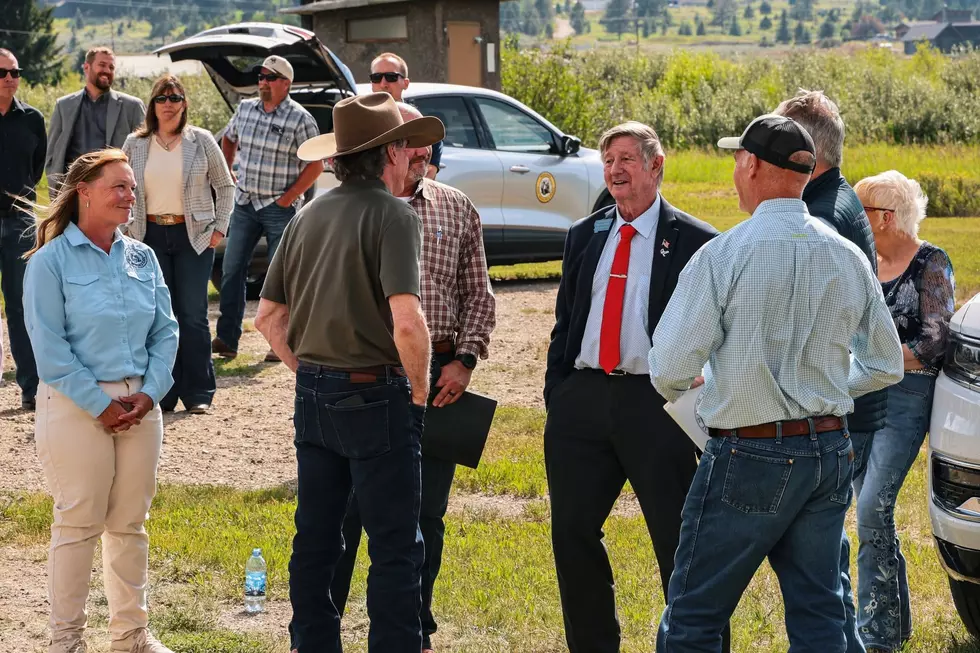
At Tuesday’s press conference, state Sen. Paul Fielder, R-Thompson Falls, was all smiles after learning about the new rule. A leader of the Montana Trappers Association, Fielder has sponsored wolf trapping bills and regularly spoken in committees against the shorter trapping season in western Montana.
All other details are to be fleshed out in the memorandums of understanding. The Fish and Wildlife Service is supposed to review the situation annually and could revoke Tier 2 status if the grizzly population in one area declines below objective or too many bears die in consecutive years.
In an analysis of the new rule, Earthjustice attorney Jenny Harbine noted the proposal doesn’t address what will be allowed in regions between recovery areas that are essential for habitat connectivity.
The delisting of the Yellowstone population in 2017 was found to be illegal because the Fish and Wildlife Service hadn’t analyzed how a possible decline in the Yellowstone population might affect out-migration to other populations still trying to recover. If the rule is finalized, that question could still apply because it’s likely more bears will die in Tier 2 areas.
After finally learning the basics of what the Fish and Wildlife Service is proposing, Defenders of Wildlife vice president Jake Li said too many of the details were still missing.
“The Service must carefully balance adequate protections for the species with flexibility to manage human-bear conflicts. The proposed 4(d) rule purports to do that but punts on important details, such that the real-world impacts of the proposal are in large part determined by later agreements that will be developed outside the rulemaking process,” Li said.
On Wednesday, hunting organizations such as the Boone and Crockett Club, Rocky Mountain Elk Foundation and Montana Wildlife Federation, responded positively to the proposal.
“The rule advances grizzly conservation from the now-resolved problem of too few bears to the now-emerging realities of abundant bears. The predictable and misleading criticism of this will be that bears are losing protection. The accurate view is that bears and people are gaining the benefits of sustainable management,” said Simon Roosevelt, Boone and Crockett vice president.
"The proposed Tier 2 framework represents a significant shift in management authority, and we will be looking closely to ensure the final rule provides strong, durable safeguards — including science-based state regulations, transparent mortality monitoring, protection for habitat and connectivity, and meaningful federal oversight—to keep grizzlies recovered for generations,” said Mike Mershon, Montana Wildlife Federation president.
However, former U.S. Fish and Wildlife grizzly bear recovery coordinator Chris Servheen - who also sits on the Montana Wildlife Federation board - doesn’t think that grizzly management needs to change. In an interview with the Yellowstonian, Servheen said 690 grizzly bears have been removed between 2002 and 2025 due to conflict with livestock and humans.
“If that isn’t management, what is? What the states want to do is make the bears go away and allow bears to be labeled “conflict bears” so more can be hunted. There is not a single grizzly bear that the states wanted to remove due to conflicts that has not been removed. Grizzly bears are intensively managed as a listed species. They are not strictly protected,” Servheen told the Yellowstonian.
The Fish and Wildlife Service will open a 30-day comment period on the proposal on Friday, ending on Aug. 17.
Contact reporter Laura Lundquist at lundquist@missoulacurrent.com.