
radio history

Harmon’s Histories: Grandma’s radio log book a trip across historic airwaves
My grandma was fascinated by a new invention in the 1920s called radio. It is she who I can thank for my interest, and later career, in radio and television. I recently came across a small booklet of hers which accompanied the 1929 radio receiver my grandparents purchased from the Nott-Atwater Company of Spokane, Wash., in which she kept track of radio stations she could pick up from her home in Libby.
Harmon’s Histories: UM physicist, students built Missoula’s 1st radio transmitter
Root Electric Company at 127 East Cedar (now Broadway) was displaying the Grebe Synchophase radio receiver. The Dickinson Piano Company featured the Zenith Long Distance radio, capable of picking up broadcasts from “as far as 1,500 miles away.” Even the H. O. Bell auto dealership on South Higgins offered the Radiola, priced from “$35 to $425 with convenient terms, if desired.”
Harmon’s Histories: Waxing nostalgic about the early days of radio broadcasting
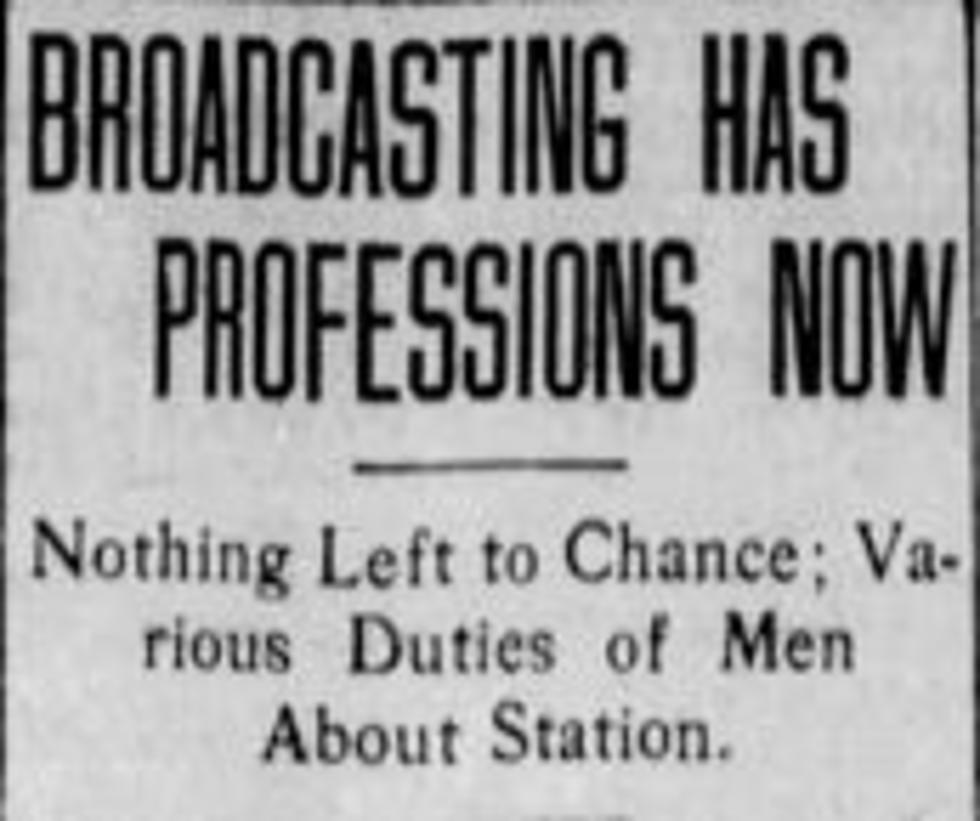
In December 1923, Waldemar Kaempffert, a “noted technical expert,” described the transition from the “the first timid experiments” with radio signals to the birth of the “broadcasting business.” That business created a whole new language and job descriptions. There were terms like “Broadcast Studio,” “Power Room” and “Master Clock,” and job titles like “Director of Broadcasting,” “Power Man” and “Announcer.”