
Viewpoint: Tariffs on Mexican beer are a tax on Montana farmers
Chuck Denowh
In a recent op-ed, Bob Bergren, the former Democratic Speaker of the Montana House, urged the Trump Administration to impose tariffs on Mexican beer. His stated motivation of protecting Montana workers is one I share. However, that’s exactly why the policy he advocates for is so puzzling. Montana farmers know that a tax on Mexican beer would only be a tax on them. Instead of protecting our farmers, tariffs on Mexican beer would devastate the same farmers and small-town economies who need support at a challenging time.
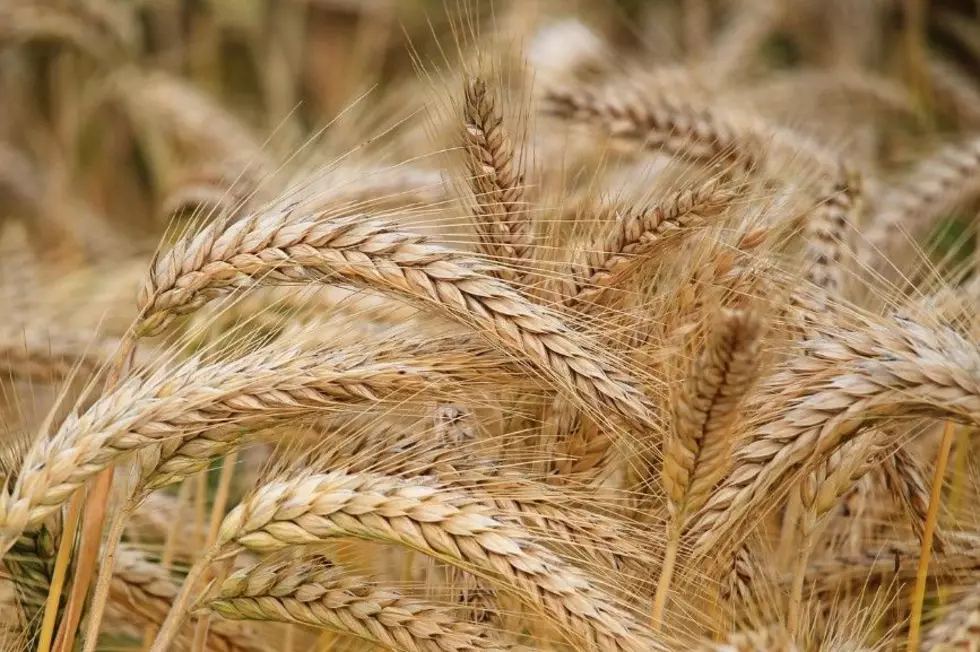
Speaker Bergren is right that Golden Triangle wheat and barley matter enormously to our state, but he leaves out how that grain reaches the world market. U.S. malt barley exports to Mexico climbed to nearly 400,000 metric tons in 2021, up 85 percent from a decade earlier, as Mexican brewers deepened their reliance on American growers. As Senator Steve Daines has stated, our farmers “grow malt barley that goes to Mexico, which comes back as imported beer."
Just ask farmers themselves. According to the President of the National Barley Growers Association, Mitch Konen, “barley exports to Mexico support more than 130,000 jobs across 9,000 farms nationwide and ensures a steady flow of U.S.-grown ingredients through the North American supply chain.” That is why the President of the Montana Grain Growers Association has said that “tariffs on Mexican beer would reduce demand for American barley” and both Congressman Ryan Zinke (R-MT) and Troy Downing (R-MT) signed a letter to the Administration highlighting the importance of Mexican beer in supporting our economy and jobs in rail, truck, logistics, family-owned beer distributors and tipped workers in the hospitality industry.
Constellation Brands, which imports Corona, Modelo, and Pacifico, has directly contracted with U.S. barley farmers in states like Montana to lock in that supply, and it has looked to expand those contracts into new barley-growing regions as its beer sales have grown. When Americans drink Mexican beer, they are supporting American farmers. A tariff on Mexican beer does not wall off Montana agriculture from foreign competition. It threatens the trade relationship that gets Montana barley to market in the first place.
Very few beer jobs are in brewing to begin with, thanks to economies of scale at a handful of massive breweries. With roughly 1.7 million jobs tied to the U.S. beer industry, only about 5 percent are in brewing itself. The rest, nearly 95 percent, are in distribution, wholesaling, retailing, trucking, and hospitality.
It is also worth asking which companies benefit from tariff protection marketed as "American beer." AB InBev, maker of Budweiser, Michelob, and Bud Light, is a Belgian-Brazilian conglomerate headquartered in Leuven, Belgium, not an American company. Nor has it been a reliable partner for our farmers. Anheuser-Busch has previously cut Montana malt barley contracts by as much as 60 percent, costing growers tens of millions of dollars.
AB InBev recently announced a $3.6 billion investment in Mexico and ran a "Made in Canada" ad campaign celebrating its Canadian workers and barley. That is not a company that deserves a tariff at the expense of Montana farmers. To support Montana’s brewers, we should aim to ensure our tax policies are on their side — not stacked in favor of foreign conglomerates trying to dominate the U.S. beer industry.
I want American workers to win and Montana agriculture to thrive. Montana farmers do best when their barley reaches Mexican breweries, and when the beer that comes back sells at a premium that supports American jobs down the supply chain. A tariff would not bring brewing jobs to Montana. It would just make one of the most profitable products on the shelf less profitable, at the expense of Montana farmers, truckers, warehouse workers, family-owned distributors and the shopkeepers who depend on it. Speaker Bergren has the right intentions but the wrong target.