
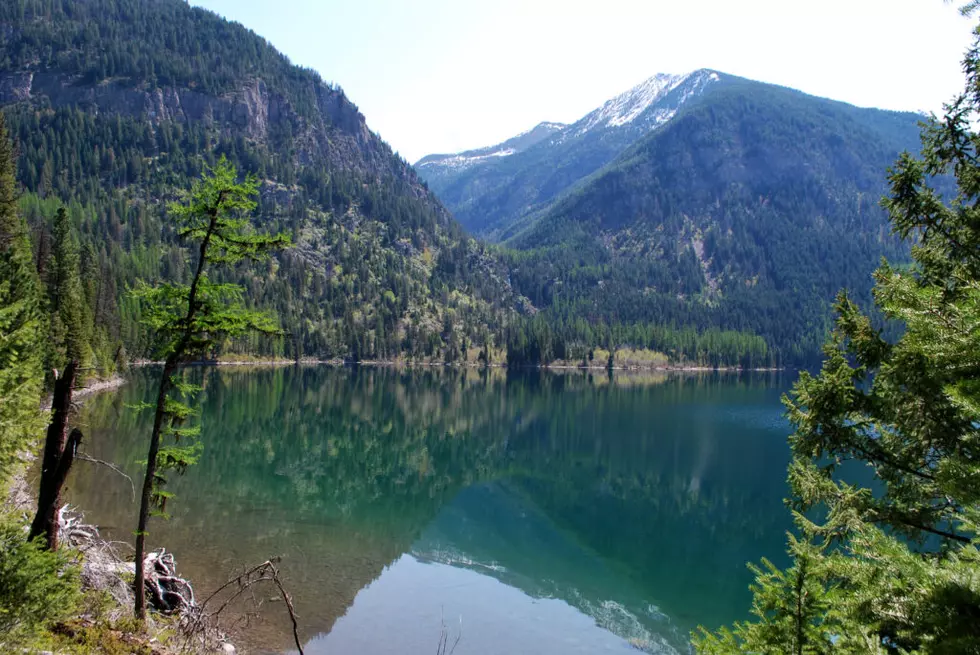
Holland Lake Lodge rejects wastewater tank test
Laura Lundquist
(Missoula Current) The Holland Lake Lodge will not be using its old storage tank for wastewater, so its plans for opening this summer may be scaled down.
The Missoula County Health Board last week said Holland Lake Lodge owner Eric Jacobsen informed them he doesn’t want to pay to test the lodge’s aging wastewater storage tank for leaks, and he was considering installing a new tank.
Missoula City-County Health Board Director Shannon Therriault told the Current in a March 10 email that the county’s health-code variance would still apply if Jacobsen bought a new storage tank, but the tank would have to be inspected by the county and the Department of Environmental Quality prior to installation. If Jacobsen wanted to propose a different alternative, he could request an amendment to the variance.
Engineer David Roberts of Save Holland Lake said he wasn’t surprised at Jacobsen’s decision. Roberts has documented water accumulation in the storage tank and suspects the tank would never pass a leak test.
“My read on that – (Jacobsen) pumped it down, realized it is leaking, and is moving to next steps. Which is good,” Roberts said in an email.
In February, the Missoula City-County Health Department and the Board of Health granted the health-code variance to allow use of the storage tank until the end of 2028 while the U.S. Forest Service replaces the wastewater lagoons that serve the lodge and neighboring campground.
The Health Department did make the variance contingent on whether the tank would pass a leak test. The tank is buried less than 100 feet from the lake and 175 feet from a public water supply. If it leaked, the sewage could contaminate the groundwater and ultimately Holland Lake.
Save Holland Lake opposed the variance, saying the Health Department staff had insufficient information to approve it. The storage tank with its crumbling concrete is more than 50 years old, and no one knew how much fluid it could contain. In early March, a county environmental health specialist went out to inspect the tank and estimated its capacity at approximately 2,353 gallons total, far less than Jacobsen’s claim of 5,000 gallons.
Now that storage tank is no longer a consideration, Roberts said it wouldn’t make sense for Jacobsen to pay for a new tank, because it would become unnecessary once the Forest Service finishes upgrading the wastewater lagoons this summer.
During the February Board meeting, Save Holland Lake proposed a different alternative: pump the wastewater up to the existing 8,000-gallon septic tanks on the hill above the Lodge.
However, the Forest Service’s plans to repair the lagoons included enlarging the lagoons to five times their current capacity, which would require removal of the septic tanks. Save Holland Lake questioned why taxpayers have to pay for larger lagoons if Jacobsen holds to his promise that he doesn’t plan to expand the Lodge. If the lagoons are simply repaired, the septic tanks could remain.
Holland Lake Lodge is still advertising bookings on its website for weddings and groups this summer. Part of the county’s variance included allowing the Holland Lake Lodge to use chemical toilets as a backup, so that is likely the only option for now.