
Feds threaten deep water cuts for states along shrinking Colorado River
Alan Riquelmy
(CN) — The federal Bureau of Reclamation on Friday released a final report on the preferred method of managing the dwindling Lake Powell and Lake Mead — changes that would impose severe reductions to water received by California, Nevada and Arizona.
The report, called a final environmental impact statement, lays the framework for developing operating guidelines for the Colorado River basin. They’re designed to ensure operations are reliable, though they’re intended to provide flexibility to changing conditions through 2036.
The final environmental impact statement comes at a crucial time for the Colorado River basin, which provides drinking water and a power source for over 40 million people in seven states, as well as irrigation water for over 5 million acres of farmland.
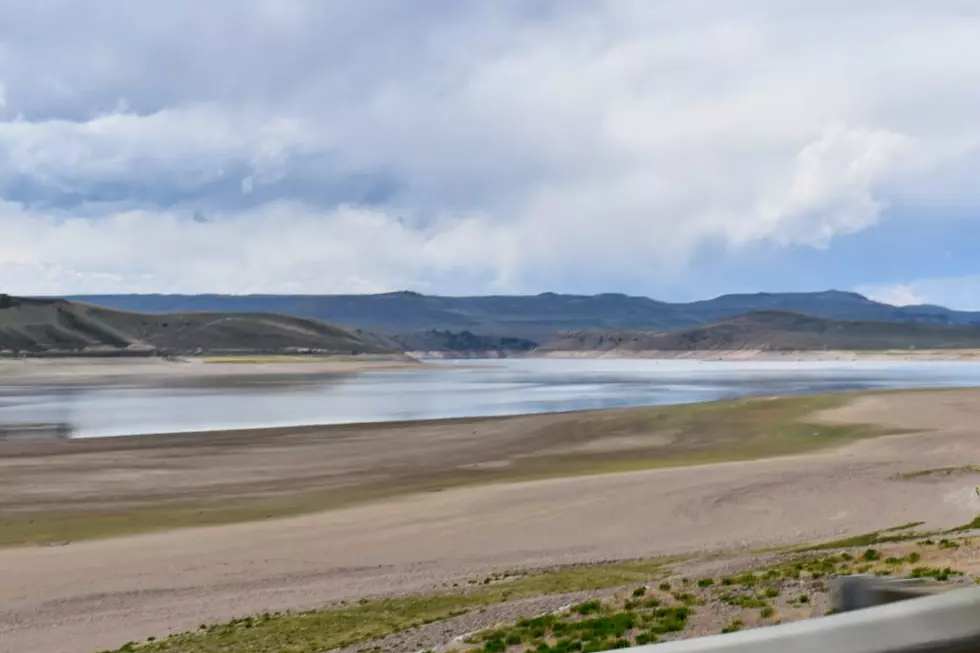
Officials have pointed to a changing climate as the reason for challenging conditions in the basin. Combined, Lake Powell and Lake Mead haven’t had levels this low since 1963. Water use has exceeded incoming flow most years since 2000.
An existing agreement between the basin states ends this year. New operations must start Oct. 1.
“The department has a responsibility to ensure the Colorado River system remains reliable and resilient for the millions of Americans, communities and industries that depend on it," Interior Secretary Doug Burgum said in a statement. “This framework provides the flexibility to respond to changing hydrologic conditions while preserving the opportunity for the basin states to continue working toward durable, consensus-based solutions.”
The framework creates operational principles that include thresholds and ranges for operations. They call for annual releases from Lake Powell of between 5 million acre-feet and 12 million acre-feet of water. Lake Powell could store up to 8 million acre-feet and Lake Mead up to 3 million acre-feet for future use.
Current rules call for the lower-basin states — California, Arizona and Nevada — to receive 7.5 million acre-feet a year. California receives 4.4 million acre-feet, Arizona 2.8 million and Nevada 300,000.
The preferred alternative calls for California’s maximum shortage — the upper level of reductions that can be imposed — to reach 0.9 million acre-feet. Arizona would face a maximum shortage of 1.96 million and Nevada 0.21 million — a loss of some 3 million acre-feet a year for the states.
The Interior Department, which includes the Reclamation Bureau, will issue operating guidelines within those restrictions every two years through 2036, unless the basin states reach an agreement.
The final environmental impact statement is the result of a three-year National Environmental Policy Act process. That process included outreach with basin stakeholders like affected states, tribes and others.
However, no consensus was reached on long-term operations.
Federal officials urged state representatives at a December water conference to work toward consensus. The seven basin state commissioners, appointed by their respective governors, said at the conference they would continue pursuing an agreement.
Because none was reached, a draft environmental impact statement issued in January had no preferred alternative — keeping open the opportunity for future negotiations.
“This plan strikes a balance between flexibility and predictability for the Colorado River system that is vital to the 40 million people who rely on it given unprecedented hydrologic conditions and the potential for considerable impacts on water users,” Andrea Travnicek, assistant secretary for Water and Science, said in a statement. “It also allows a new flexibility to respond to changing conditions and potential consensus.”
Officials said in a Friday statement the ability to negotiate and reach consensus is paramount, as it’s the surest way to balance users’ needs. Poor hydrology and reduced reservoir levels inflame disputes among those users.
That gave rise to the need for federal action. The interior secretary is obligated by law to coordinate operations of Colorado River reservoirs. The 2007 guidelines, currently in effect, expire this year. Additionally, those guidelines lack the strength to properly protect the resources which rely on the river, officials said.
“For decades, Southern Nevada has demonstrated its leadership in sustainable water management by investing in water efficiency, recycling, and conservation, and we remain committed to finding a consensus-based path forward for the Colorado River," said John Entsminger, Southern Nevada Water Authority general manager and Nevada’s lead negotiator on the Colorado River, in a statement to Courthouse News. “However, any plan built around significant reductions for only three of the seven basin states that share the river is fundamentally flawed by its nature. While our community is prepared to manage through short-term reductions to protect the Colorado River system, as the basin’s smallest water user, Nevada cannot solve the river’s imbalance alone. Long-term solutions must recognize that the Colorado River’s challenges are basin-wide and require basin-wide participation.”