
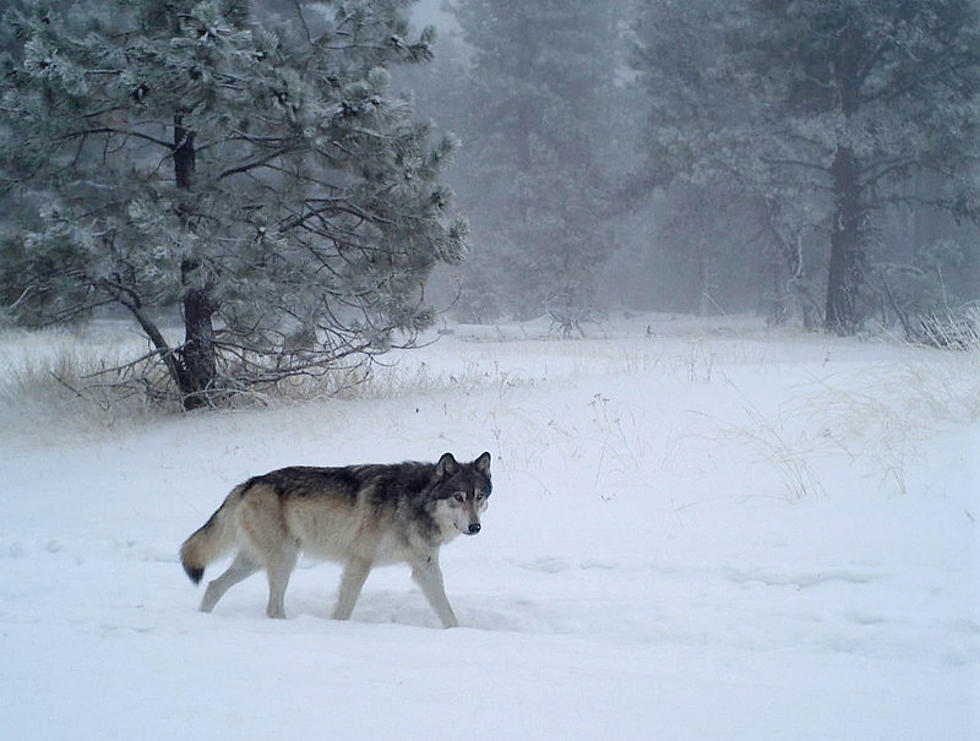
FWP calls for higher wolf quotas, bag limits based on report
Laura Lundquist
(Missoula Current) The estimated number of wolves in Montana decreased slightly in 2024, but Montana Fish, Wildlife & Parks is proposing more wolf hunting and trapping to push the statewide population down to 450.
On Monday, FWP released its annual wolf report for 2024, which says the statewide wolf population was estimated at slightly less than 1,100 wolves at the end of 2024 while the previous year’s estimate was about 1,100. But because that number is an estimate based on a computer model that isn’t exact, the number could be as high as 1,240 and as low as 920.
While estimated statewide numbers haven’t changed much, numbers within the FWP regions have. Region 3 packs have experienced the greatest decline since 2020, with population estimates dropping to 173 in 2024 from 215. During the 2024-2025 season, the season in Region 3 closed early when the quota of 52 wolves was exceeded by three in late January. Hunting Unit 313 adjacent to Yellowstone National Park closed significantly early when the quota of three wolves was exceeded by one in October.
In Regions 1 and 2 in western Montana, estimated population sizes have stayed relatively constant at about 500 and 300, respectively. The Region 4 population has dropped from an estimate of 100 to about 80 since 2020, and the other three regions have fewer than 25 wolves each.
“We continue to see declines in the estimated number of wolves and wolf packs in Region 3, which suggests the current combination of hunting, trapping, and conflict management removals can effectively reduce wolf numbers in some areas at least,” said Quentin Kujala, FWP Chief of Conservation Policy, in a release.
The Montana wolf population peaked in 2011 - the year that wolves were Congressionally delisted in the Northern Rocky Mountains - and FWP biologists physically counted 653 wolves statewide. Biologists no longer count wolves, using hunters reports and other indicators to make estimates. Prior to 2020, FWP used a different mathematical model to estimate the total number of wolves, and in 2011, the model estimated the population at around 830 plus or minus about 200.
But in 2020, FWP shifted to a new model called the “integrated patch occupancy model” or iPOM, which produces higher population estimates. For example, the population estimate for 2011 jumped by almost 450 wolves to around 1,270.
Some have questioned the higher population estimates and there’s been a continuing debate about FWP’s use of the iPOM. Some statisticians say the model has a mathematical bias that overestimates populations, and when they try to reproduce the wolf population calculations, they don’t get the same results. Sarah Sells, U.S. Geological Survey Montana Cooperative Wildlife Research Unit researcher who developed iPOM, said the critics misunderstand how iPOM works.
The issue was raised during the 2025 Legislature when a few bills tried to require FWP to cut the population down to 450 wolves. But since FWP uses population estimates, some questioned when FWP would know that the population had reached 450. The bills were defeated.
FWP and some Montana legislators point to the minimal decline in wolf numbers as evidence that hunting and trapping hasn’t hurt wolf populations, even after regulations have been increasingly liberalized since 2021. The 2021 and 2023 Legislatures have mandated wolf regulations to include higher bag limits, snares, hunting with bait and hunting at night with lights or night-vision goggles.
Even so, the number of wolves sportsmen kill each year hasn’t changed much. According to the 2024 report, 297 wolves were killed by either hunting or trapping during the 2024-2025 season, which ended on March 15. That’s a slight increase over about 280 killed the previous season, but down from the high of about 325 wolves killed in 2020. In 2024, hunters killed about 60% of the wolves while trappers took about 40%.
Those numbers don’t include the number of wolves that die of poaching or those killed in response to livestock depredation. In 2024, Wildlife Services confirmed that wolves killed 35 cattle, 16 sheep, 3 foals, and 8 livestock guard dogs statewide. To address livestock conflicts, Wildlife Services or ranchers killed 25 wolves during 2024. The highest number of livestock killed was 300 in 2009. After that, depredation dropped and has been fairly constant at between 50 and 100 animals.
But because hunters and trappers haven’t been able to reduce the wolf population significantly, FWP is proposing its own changes to wolf regulations to increase the number of kills. At the FWP commission meeting in August, FWP will propose several new regulations that have been enabled by recent legislation.
First, hunters and trappers will be able to kill 15 wolves on a single license for a total of 30 wolves, provided that at least five of those wolves are hunted and at least five of are trapped in FWP Regions 1 or 2. On private lands, hunters can hunt wolves at night using artificial light, night vision, infrared, and thermal imaging scopes.
“We’ve tried different regulations over the past two years in an effort to increase harvest and realize a decline in wolf numbers, but those changes have only had success in certain areas of the state, most notably southwest Montana,” Kujala said in a release. “The changes we’re proposing this year are targeted at trying to increase harvest in west and northwest Montana.”
It’s FWP’s final proposal - increasing the statewide wolf quota to 500 from 334 - that has Wolves of the Rockies most concerned. Marc Cook, Wolves of the Rockies director, said hunters and trappers haven’t dented the wolf populations in Regions 1 and 2 because the mountains make hunting and trapping more strenuous. Region 1 currently has a quota of 131 wolves while Region 2 has a quota of 104. Neither region reached its quota during the season, so that’s the reason for the requirement that five wolves be hunted and trapped in Regions 1 and 2 if sportsmen want to kill 15 wolves on the same license.
Cooke anticipates that more wolves will be killed in Region 3 to meet the 500-wolf quota, which will further decrease the population in southwest Montana. He pointed to a 2003 Legislative bill that required FWP to reduce elk numbers to meet population objectives and asked why does FWP want to focus on wolves when it hasn’t achieved anything with elk?
“Part of my heartburn on this is we’re just two or three months out of the Legislative session, and the department is jumping on this, hellbent on killing these animals,” Cooke said. “We still can’t get the elk numbers down 22 years later, but if it’s wolves, let’s kill these (animals) and let’s kill them now. It’s wrong.”
Contact Laura Lundquist at lundquist@missoulacurrent.com.